

The Candidate Evaluation Form is a valuable tool for recruiters and hiring managers to ensure the right talent is being hired. Rather than being a checklist of qualifications, this strategic tool encompasses multiple elements and wider significance. This comprehensive guide offers insights on the Candidate Evaluation Form, its importance, major elements, and best practices in preparing the form. Read on for ensuring successful hiring experiences!
Overview of Candidate Evaluation Form
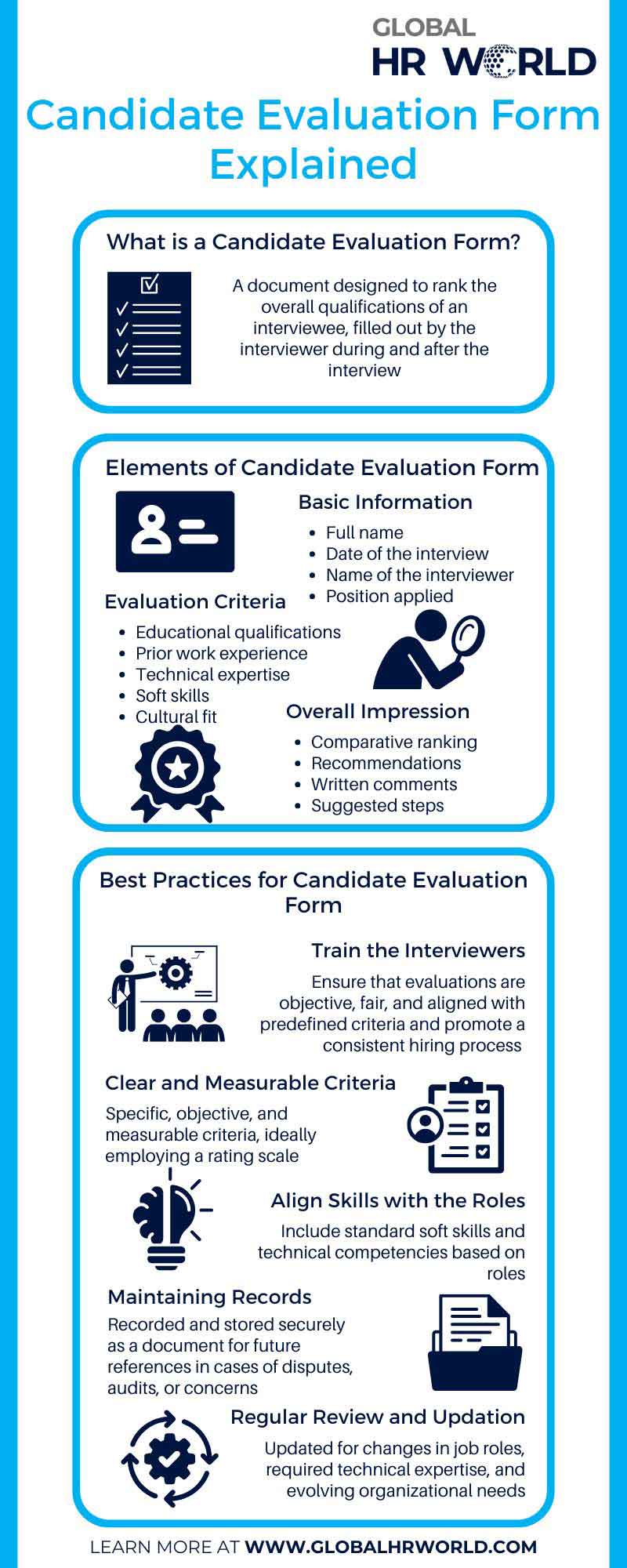
Talent Acquisition is one of the most crucial functions within an organization, focusing on bringing fresh candidates to the business. However, it can often become a long, complex, and overwhelming task. Studies suggest that “45% of business leaders spend more than half their time on TA tasks, taking valuable time away from core business operations.” (Source: Unlocking Profitability with AI-driven Talent Acquisition, Smart Recruiters). This requires a standardized approach to hiring talent with set criteria that ensure fair assessment. A candidate evaluation form is a document designed to rank the overall qualifications of an interviewee, filled out by the interviewer during and after the interview. This form documents the interviewer’s impressions and observations of each candidate’s interview performance.
Importance of Candidate Evaluation Form
Organizations need to possess a candidate evaluation form to ensure fair talent acquisition, especially when it comes to choosing from a diverse talent pool of applicants. Here are some of the reasons highlighting the importance of candidate evaluation form.

Ensures Standardization
The candidate evaluation form ensures hiring with a uniform lens by outlining exactly what should be hired, creating a consistent framework that could be applied across all interviews and candidates, reducing ambiguity in the hiring process.
Reduce Biases
Sometimes interviewers, knowingly or unknowingly, carry biases based on a candidate’s gender, culture, age, or race that could influence decisions and lead to inconsistent hiring outcomes. A well-structured candidate evaluation form helps combat this by offering set criteria for judging candidates.
Avoiding Illegal Criteria
A candidate evaluation form is critical because it helps prevent the use of illegal or inappropriate criteria during the hiring process. Hiring managers or interviewers can’t just alter evaluation standards to justify a candidate. According to the LinkedIn 2025 Future of Recruiting Report, “93% of TA pros believe accurately assessing a candidate’s skills is crucial for improving quality of hire.” The form, therefore, ensures that all candidates are assessed based on pre-established, job-relevant criteria, affirming transparency.
Collaborative Decision-Making
Multiple interviewers involved in the hiring process have differing opinions and impressions on a candidate, leading to confusion and conflict. A candidate evaluation form helps the panel to undertake a collective decision with the set criteria.
Time Saving
Selecting the right candidate for a position can be a time-consuming task, often involving extended discussions among interviewers about each candidate’s performance and fit for the role and longer hiring timelines. With a consistent way to add feedback, the candidate evaluation form reduces the time in appointing the right talent to the organization.
Elements of a Candidate Evaluation Form
The purpose of a candidate evaluation form is best attained if it is well-structured and thoughtfully designed. A candidate evaluation form typically consists of three major elements contributing significantly to the selection criteria.
Basic Information
The first part of the candidate evaluation form covers the basic details such as the full name, date of the interview, name of the interviewer, and position applied for. This information is necessary to keep the evaluation organized and linked to the right candidate.
Evaluation Criteria
The core part of the candidate evaluation form is the evaluation criteria, which serves as the rubric for assessing key qualifications, including the candidate’s educational qualifications, prior work experience, technical expertise, soft skills, and cultural fit. Interviewers use this section to rate or rank each area, allowing for a fair comparison across all candidates.
Overall Impression
The final part of the form is the overall impression, which provides a summary of the candidate’s performance, including a comparative ranking, recommendations based on the ranking, written comments, overall rating, and suggested steps such as moving forward with the candidate, further considerations, or declining.
Best Practices in Candidate Evaluation Form
To yield the maximum use of the candidate evaluation form, organizations must go beyond possessing the document but appropriate implementation. Here are some of the best practices to be followed in the form.
Train the Interviewers
Training the interviewers on the proper usage of the candidate evaluation form and the ranking to ensure uniformity in rating the candidates. Familiarity with the form helps ensure that evaluations are objective, fair, and aligned with predefined criteria and promotes a consistent hiring process throughout the organization.
Clear and Measurable Criteria
The evaluation criteria listed in the form should be specific, objective, and measurable: Ideally, employing a rating scale that enables interviewers to assess the observable performance. Furthermore, written comments should be provided along with numerical scores to offer a fuller judgement.
Align Soft Skills and Technical Expertise with the Roles
While the candidate evaluation form may include standard soft skills and technical competencies, it is important to align the relevance based on the specific roles to ensure a meaningful assessment of the candidate’s fit.
Maintain Records
Completed forms should be recorded and stored securely as a document for future references in cases of disputes, audits, or concerns related to hiring decisions, and a record for reference during future hiring experiences.
Regular Review and Updation
Ensure that the candidate evaluation form is regularly reviewed and updated for changes in job roles, required technical expertise, and evolving organizational needs.
Conclusion
The Candidate Evaluation Form plays a vital role in strengthening the recruitment process by serving as a structured document that enables interviewers to rank a candidate’s overall qualifications fairly and consistently, during and after the interview. Its significance lies in ensuring standardization, reducing biases, avoiding illegal criteria, supporting efficient decision-making, and ultimately saving time.
The form typically includes three essential components: basic information (such as candidate and interviewer details), evaluation criteria (covering education, experience, and skills), and overall impression (with rankings and final recommendations). To ensure maximum effectiveness, organizations must follow best practices, such as training interviewers, using clear and measurable criteria, aligning competencies with job roles, maintaining thorough records, and regularly reviewing the form for updates. Successful incorporation of a candidate evaluation form is necessary in organizations to yield the best outcomes in the recruitment process.
Infographic
Knowledge Check!
Frequently Asked Questions (FAQs)
What is a Candidate Evaluation Form?
A candidate evaluation form is a document designed to rank the overall qualifications of an interviewee, filled out by the interviewer during and after the interview.
What is the importance of the candidate evaluation form?
The importance of candidate evaluation forms lies in ensuring standardization, reducing biases, avoiding illegal criteria, supporting efficient decision-making, and ultimately saving time.