

The true power of appreciation lies in its ability to make employees feel genuinely valued, avoiding the risk of burnout. This highlights the importance and benefits of employee rewards and recognition, which instill in employees the belief that they are valued and included. This blog offers insights into the importance and benefits of employee rewards and recognition, along with offering an overview of rewards and recognition and their different types.
Overview of Employee Rewards and Recognition
Rewards and recognition are powerful tools of acknowledgment, appreciation, and motivation in the workplace. These initiatives foster a positive and engaging workplace culture. To define, rewards are tangible and structured benefits tied to individual performance, often taking the form of bonuses, raises, and special privileges. These serve as extrinsic motivators, encouraging specific behaviors and achievements aligned with organizational goals.
Recognition is intangible and centers on making employees feel genuinely valued. It may come as verbal or written appreciation, public announcements, or even thoughtful gestures. Unlike rewards, recognition taps into intrinsic motivation, fostering a deeper sense of belonging and emotional connection to the organization.
Types of Rewards and Recognition
Organizations commonly offer different types of rewards and recognition to make employees feel valued, committed, and motivated in their work. Here are some common types of rewards and recognition programs used across organizations.
Rewards
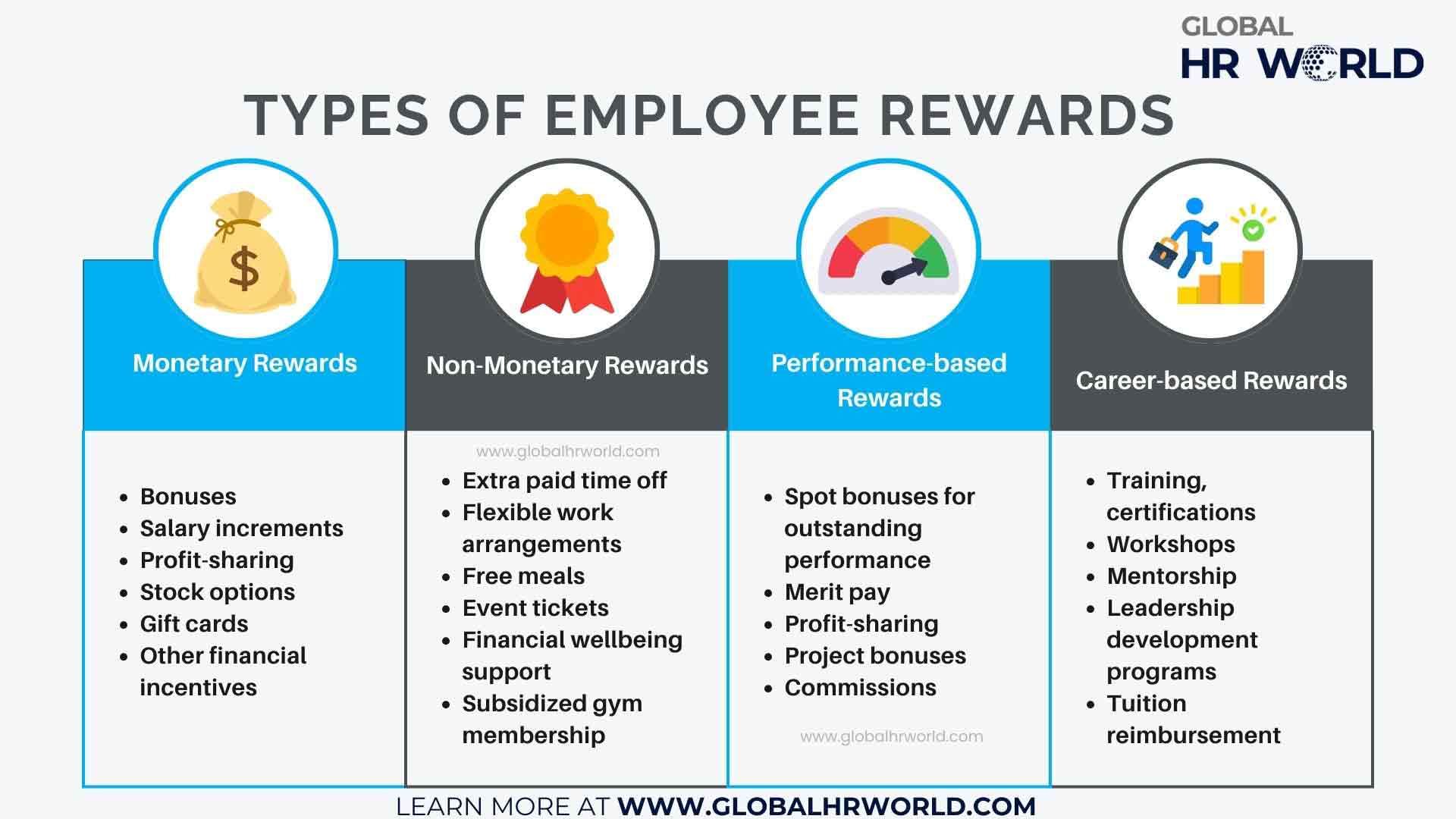
- Monetary Rewards: The financial offerings given to employees in recognition of their contributions and achievements to the organization. Common examples include bonuses, salary increments, profit-sharing, stock options, gift cards, and other financial incentives.
- Non-Monetary Rewards: The rewards lack explicit monetary benefits but offer employee satisfaction and motivation. Common examples include extra paid time off, flexible work arrangements, free meals, event tickets, financial wellbeing support, employee discount scheme, subsidized gym membership, etc.
- Performance-based Rewards: Incentives and offerings that employees receive based on their performance and contributions to the organizations in the form of both monetary and non-monetary rewards. Examples include spot bonuses for outstanding performance, merit pay, profit-sharing, project bonuses, and commissions.
- Career-based Rewards: Offerings that support employees’ professional growth and skill enhancement, such as promotions, professional development programs, such as access to training, certifications, or workshops, mentorship, leadership development programs, tuition reimbursement or educational allowance, learning platforms memberships, etc.
Recognition
- Verbal Recognition: The Act of expressing appreciation using spoken words by acknowledging employees’ efforts, achievements, or positive behavior. For example, one-on-one praise from a manager, team meeting shout-outs, and leader recognition.
- Written Recognition: Appreciation or acknowledgement in the form of written communication, such as notes of gratitude, recognition letters, mentions in newsletters and internal platforms.
- Social Recognition: The act of acknowledging an employee’s efforts and achievements. As per the 2024 State of Recognition Report by Achievers, “social recognition can make up 60-70% of employee recognition and still drive business results.
Importance and Benefits of Employee Rewards and Recognition
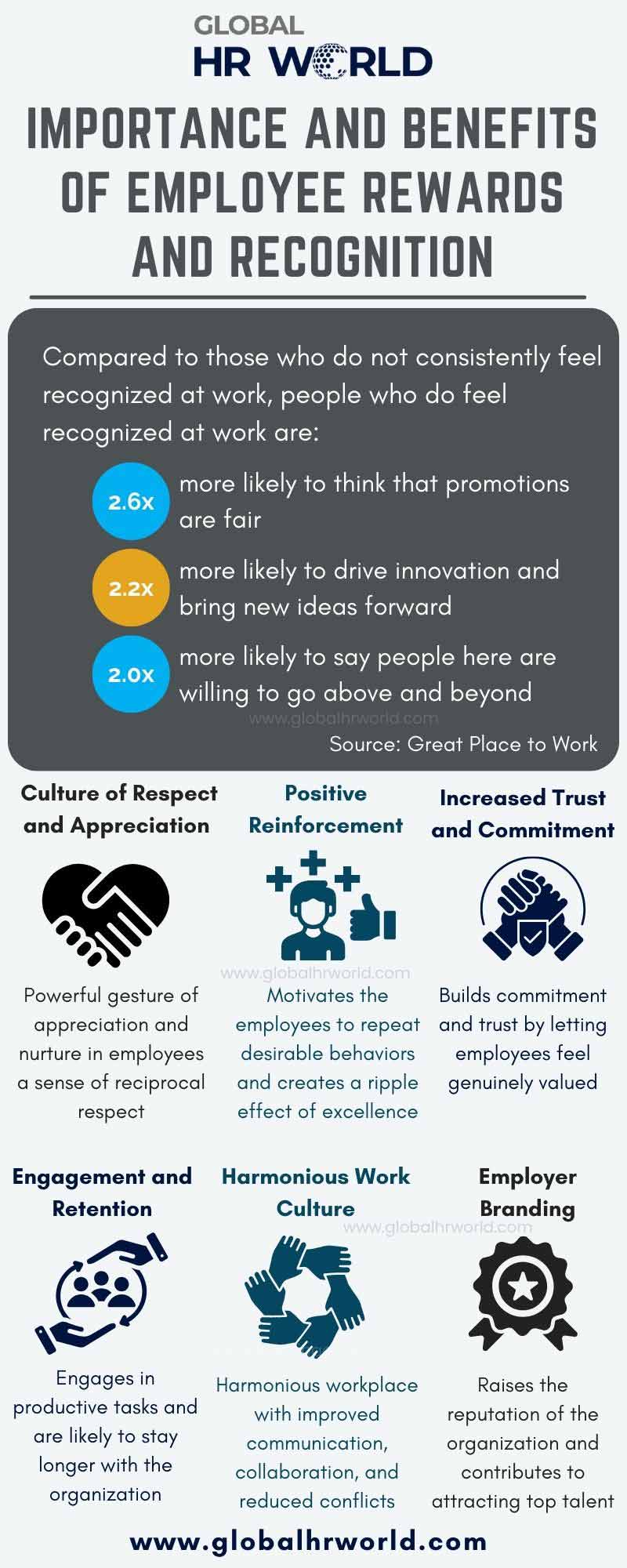
Do you know that “compared to those who do not consistently feel recognized at work, people who do feel recognized at work are 2.6x more likely to think that promotions are fair, 2.2x more likely to drive innovation and bring new ideas forward, and 2.0x more likely to say people here are willing to go above and beyond.” (Source: Great Place to Work). This highlights the immense importance and benefits of employee rewards and recognition. While a wide majority considers rewards and recognition to be factors motivating employees and focusing on the employee, the importance and benefits profit the organization alike. Below are some of them.
Importance and Benefits of Employee Rewards and Recognition #1: Fosters a Culture of Respect and Mutual Appreciation
A major importance and benefit of employee rewards and recognition lies in fostering a culture of respect and mutual appreciation. Organizations consistently acknowledging the efforts of the employees serve as a powerful gesture of appreciation and nurture in employees a sense of reciprocal respect toward the employer.
Importance and Benefits of Employee Rewards and Recognition #2: Positive Reinforcement
Rewards and recognition instill positive reinforcement in employees by creating a strong connection between their actions and the appreciation received. This reinforcement motivates the employees to repeat the desirable behaviors and creates a ripple effect of excellence, encouraging others to embrace a culture of high performance. “83.6% of employees feel that recognition affects their motivation to succeed at work.” (Source: Nectar).
Importance and Benefits of Employee Rewards and Recognition #3: Increased Commitment and Trust
In addition to fostering a culture of appreciation and mutual respect, employee rewards and recognition also build commitment and trust by letting employees feel genuinely valued. This encourages people to express their perspectives and ideas effectively and strengthens emotional connection to the work. Furthermore, employees are more likely to be loyal and contribute meaningfully toward organizational goals.
Importance and Benefits of Employee Rewards and Recognition #4: Employee Engagement and Retention
With consistent efforts to reward and recognize employees for their contributions, organizations can significantly enhance employee engagement. For instance, statistics suggest that “when employees believe they will be recognized, they are 2.7x more likely to be highly engaged” (Source: Quantum Workplace). Employees become more engaged in delivering positive outcomes for the organization when they witness that every effort is recognized and valued. Furthermore, this consistent acknowledgment not only boosts morale but also leads to higher retention rates, as employees are more inclined to stay and grow with an organization that truly appreciates their contributions.
Importance and Benefits of Employee Rewards and Recognition #5: A Harmonious Work Culture
Promoting an environment of mutual respect, trust, and loyalty paves the way to a harmonious work culture with improved communication, collaboration, and reduced conflicts.
Importance and Benefits of Employee Rewards and Recognition #6: Employer Branding
The constant practice of offering rewards and recognition raises the reputation of the organization and contributes to attracting top talent, along with retaining existing employees. This is associated with elevated employee advocacy and increased visibility of the employer promoting an employee-centric culture.
Strategies for Effectiveness in Employee Rewards and Recognition
Understanding the importance of employee rewards and recognition, it is crucial to ensure appropriate acknowledgement by incorporating some strategies such as:
- Incorporate frequent rewards and recognition to continuously reinforce the employees.
- Promote an equitable incentive program for fair and inclusive recognition.
- Link rewards and recognition to specific actions and give them promptly as delayed acknowledgement is equivalent to denied one.
- Recognize creative ideas with creative rewards that match the originality of the output.
- Incorporate a culture of continuous feedback to reinforce and sustain meaningful rewards and recognition.
- Offer personalized rewards and recognition for good performance, ensuring fairness and team harmony.
Conclusion
In short, the importance and benefits of employee rewards and recognition lie in how effectively organizations use these powerful tools of acknowledgment, appreciation, and motivation. While often used together, rewards refer to tangible benefits, whereas recognition involves intangible expressions of appreciation.
Rewards may include monetary incentives, non-monetary perks, performance-based bonuses, and career development opportunities, while recognition can be verbal, written, or social. Implementing effective reward and recognition practices leads to numerous benefits: it fosters a culture of respect and mutual appreciation, encourages positive reinforcement, strengthens trust and commitment, boosts employee engagement and retention, enhances workplace harmony, and contributes positively to employer branding.
To ensure effectiveness, organizations should adopt certain strategies such as offering frequent and timely recognition and promoting equitable and inclusive incentive programs. Ultimately, every organization should recognize the strategic importance of rewards and recognition and actively cultivate a culture where every employee feels valued, respected, and inspired to contribute their best.
Infographic
Knowledge Check!
Frequently Asked Questions (FAQs)
What is a Reward?
Rewards are tangible and structured benefits tied to individual performance, often taking the form of bonuses, raises, and special privileges.
What are the types of rewards and recognition?
Rewards may include monetary incentives, non-monetary perks, performance-based bonuses, and career development opportunities, while recognition can be verbal, written, or social.
What are the importance and benefits of employee rewards and recognition?
Implementing effective reward and recognition practices leads to numerous benefits: it fosters a culture of respect and mutual appreciation, encourages positive reinforcement, strengthens trust and commitment, boosts employee engagement and retention, enhances workplace harmony, and contributes positively to employer branding.