

Wellness or wellbeing of employees is an essential indicator of a successful workplace. Incorporating wellness programs for employee health promotion fosters a positive work environment where employees feel valued and supported by their employer, increasing productivity. The upcoming paragraphs explore the importance, components, and essential wellness programs for employee health.
What are Wellness Programs?
Employee wellbeing reflects how employees feel about their work and workplace, shaped by the conditions employers create to help them thrive both personally and professionally. Wellness programs for employees refer to a set of initiatives by an organization aiming to promote the physical, mental, and emotional wellbeing among employees and their dependents. These programs foster healthy lifestyle choices and prevention of illness, while supporting employees’ wellbeing, leading to enhanced satisfaction. According to The State of Employee Wellbeing in the Workplace 2024, “55% of employees are thriving in their overall wellbeing at work,” underscoring the importance of wellbeing programs for employee health promotion.
What are the Components of Wellness Programs for Employee Health Promotion?
Wellness programs for employee health encompass different key components contributing to soundness in the workplace. The components of wellness programs for employee health promotion are:
Physical Wellness
Physical wellness for employees focuses on maintaining employees’ physical health through illness prevention, early detection, and effective treatment strategies, contributing to overall health.
Mental Wellbeing
Another component of wellness programs for employee health promotion is mental wellbeing, which focuses on addressing stress and preventing burnout through initiatives such as counselling services, mental health awareness campaigns, wellness spaces, and stress management strategies.
Healthy Work-Life Balance
In addition to physical and mental wellbeing, a healthy work-life balance is another key component of wellness programs by supporting physical and mental health. As per Champion Health, “65% of people cite workload as the biggest factor of workplace stress.” By effectively balancing professional responsibilities and personal needs, a healthier lifestyle is created, reducing the risk of health issues due to overwork.
Why are Wellness Programs for Employee Health Promotion Crucial?
Wellness programs for employee health promotion are becoming increasingly vital, as they not only enhance employees’ perception of the organization but also strengthen the organization’s external reputation and overall performance. Here are some key reasons to implement these programs.
Strong Workplace Culture
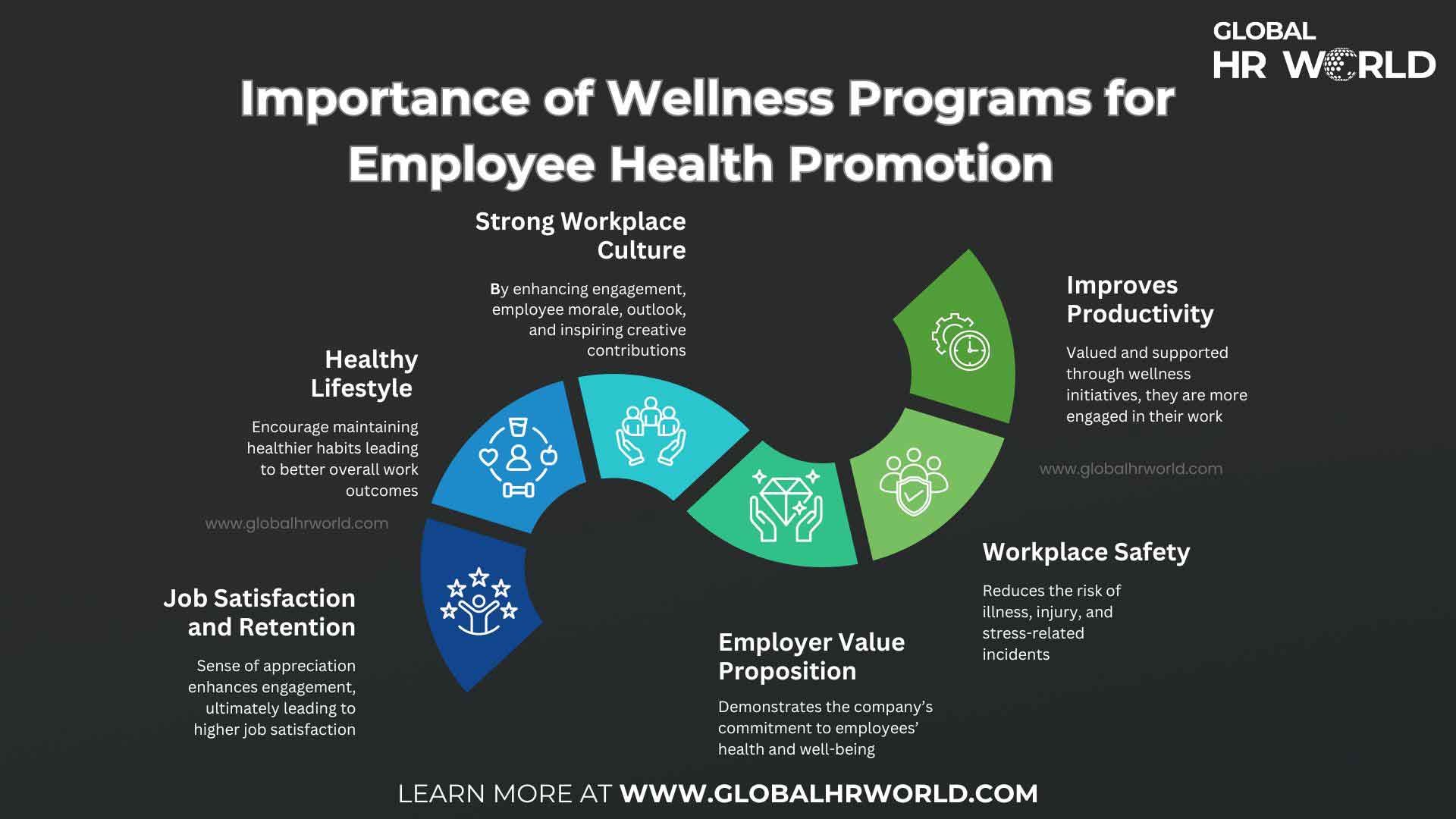
Wellness programs contribute to a stronger, healthier workplace culture by enhancing engagement, employee morale, outlook, and inspiring creative contributions. Moreover, these initiatives promote camaraderie and collaboration among employees, enhancing social wellbeing and workplace relationships.
Healthy Lifestyle
Organizations that offer wellness programs for employee health promotion play a key role in fostering healthy lifestyles among their talent force. These programs, such as subsidized gym memberships, nutrition workshops, and incentives for achieving personal health goals, encourage maintaining healthier habits, which in turn lead to better overall work outcomes.
Job Satisfaction and Retention
Promoting wellness programs fosters greater trust and inclusivity in the workplace, helping employees feel valued and supported by their employers. This sense of appreciation enhances engagement, ultimately leading to higher job satisfaction. In turn, greater job satisfaction contributes to increased employee retention, with more employees choosing to remain with the organization for longer periods. “Employees who experience high levels of wellbeing in the workplace are 3 times more likely to intend to stay with their employer.” (Source: Great Place to Work, 2024).
Contributes to Employer Value Proposition
An Employer Value Proposition (EVP) refers to the “testament of the values, benefits, support, and company culture given by the company to its employees.” Wellness programs form a critical element of an organization’s EVP, offered as a valuable benefit that demonstrates the company’s commitment to employees’ health and well-being. By prioritizing wellness in the EVP, organizations enhance their ability to retain and attract top talent, strengthening both employee satisfaction and employer reputation.
Workplace Safety
A healthy workplace is a safe workplace. By investing in wellness programs for employee health promotion, organizations actively contribute to workplace safety by reducing the risk of illness, injury, and stress-related incidents. These programs ensure that employees get equipped with skills to thrive in the workplace without worrying about potential risks.
Improves Productivity
Another important reason to incorporate employee wellness programs is the positive impact on productivity. When employees feel valued and supported through wellness initiatives, they are more engaged and focused on their work, elevating productivity. Furthermore, by addressing and preventing physical and mental health-related issues, these programs help reduce absenteeism, enabling employees to contribute effectively to organizational goals.
What are the Essential Wellness Programs for Employee Health Promotion?
To ensure effectiveness and maximize the benefits associated with wellness programs for employee health promotion, employers must identify and implement the following initiatives in their organization.
Health Benefits
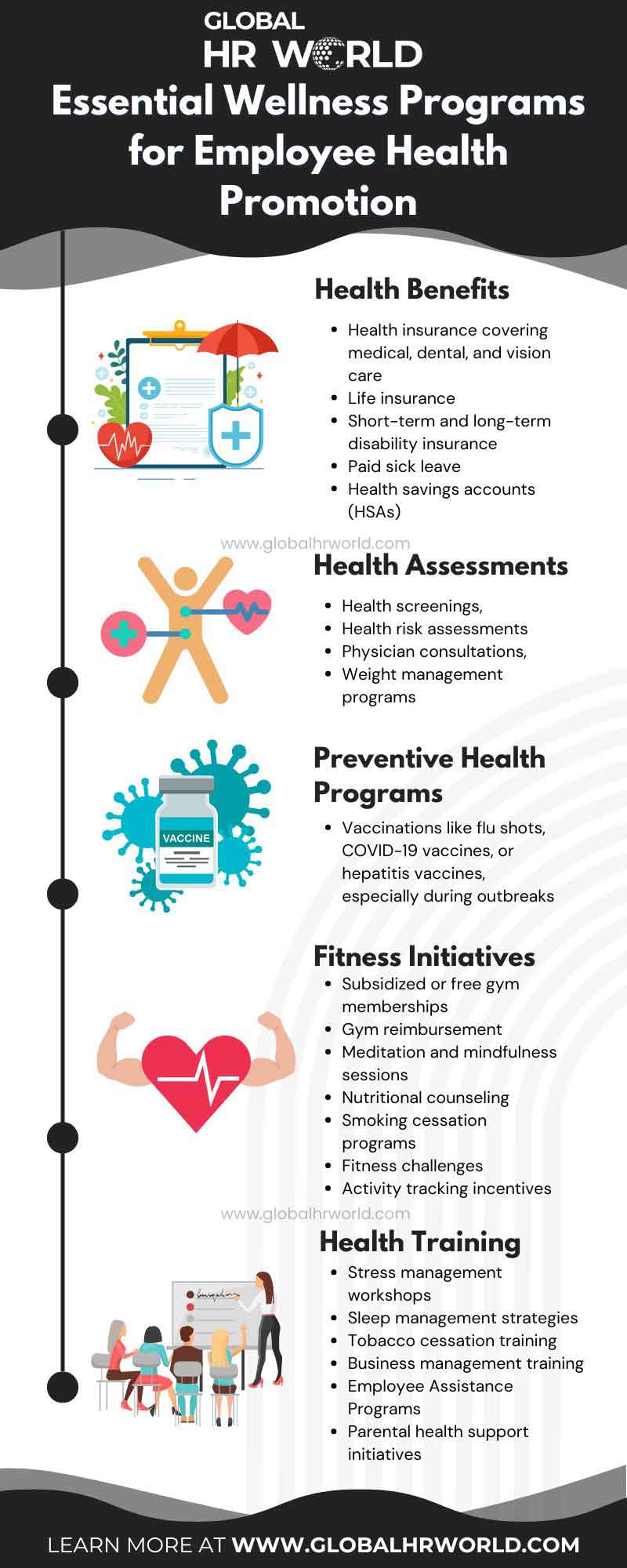
Organizations must consider implementing comprehensive health benefits such as health insurance covering medical, dental, and vision care, life insurance, short-term and long-term disability insurance, paid sick leave, and health savings accounts (HSAs). By offering these benefits, employers demonstrate their commitment to employees’ health, security, and well-being.
Health Assessments
In addition to offering health benefits, organizations should provide regular health assessments to support proactive care. These include health screenings, health risk assessments, physician consultations, and weight management programs (biometric screenings) to help employees understand their current health status and identify targeted strategies to prevent the escalation of potential health issues.
Preventive Health Programs
Organizations should implement preventive health programs, such as offering vaccinations like flu shots, COVID-19 vaccines, or hepatitis vaccines, especially during outbreaks or epidemics.
Fitness Initiatives
Another major essential wellness program is fitness initiatives. These include offering subsidized or free gym memberships, gym reimbursement, meditation and mindfulness sessions, nutritional counseling, smoking cessation programs, healthy eating seminars, fitness challenges, and activity tracking incentives that offer improved health outcomes.
Health Training
Regular health training, including incorporating stress management workshops, sleep management strategies, tobacco cessation training, business management training, Employee Assistance Programs (EAPs), and parental health support initiatives such as maternity and paternity wellness programs, empowers employees with knowledge and awareness of good health practices.
Strategies for Ensuring Effectiveness in Incorporating Wellness Programs
When incorporating wellness programs for employee health promotion and fostering a healthier work culture, it is imperative to adopt key strategies to ensure the programs are effective and inclusive. Some of the key strategies include:
- Communicate clearly with employees about the importance of health and wellness and the initiatives offered by the organization.
- Offer incentives and rewards for maintaining good health practices, especially during health programs, to motivate employees toward well-being and productivity.
- Ensure engaging, just-in-time training programs that are flexible and help employees gain a better understanding of wellness.
- Select representatives or champions from every department or team within the organization to ensure wellness programs are implemented effectively.
- Appoint mental health experts, such as counsellors or professionals in psychology and clinical psychiatry, to assess employee mental health and recommend appropriate care.
- Provide diverse and inclusive wellness options to provide every employee with equal and fair opportunities to improve their health.
- Adopt strategies to measure the overall effectiveness of wellness programs, including assessing employee engagement, frequency and extent of program utilization, participation in wellness initiatives, and observing visible improvements in employee well-being.
Conclusion
In a nutshell, wellness programs are offered by organizations to foster healthy lifestyles and prevent illness among employees, encompassing physical wellness, mental well-being, and a healthy work-life balance, and play a crucial role in promoting employee health, retaining talent, and fostering a culture of continuous growth.
Infographic
Knowledge Check!
Frequently Asked Questions (FAQs)
What are employee wellness programs?
Wellness programs for employees refer to a set of initiatives by an organization aiming to promote the physical, mental, and emotional wellbeing among employees and their dependents.
What are the components of wellness programs for employee health promotion?
The components of wellness programs for employee health promotion include physical wellness, mental wellbeing, and healthy work-life balance.
Why are wellness programs for employee health promotion crucial?
Wellness programs for employee health promotion is important as it fosters strong workplace culture, ensures a healthy lifestyle, promotes job satisfaction and retention, contributes to employer value proposition, enhances workplace safety, and improves productivity.
What are essential wellness programs for employee health promotion?
The common wellness programs for employee health promotion include health benefits, health assessment, preventive health programs, fitness initiatives, and health training.