

HR challenges in the retail industry are becoming increasingly complex, affecting the operations and overall business performance. With HR serving as the backbone of workforce management and employee experience, it is crucial to identify and resolve HR issues before they escalate. The blog offers insights into the top HR challenges in the retail industry and tips for overcoming them. Read on!
Role of HR in the Retail Industry
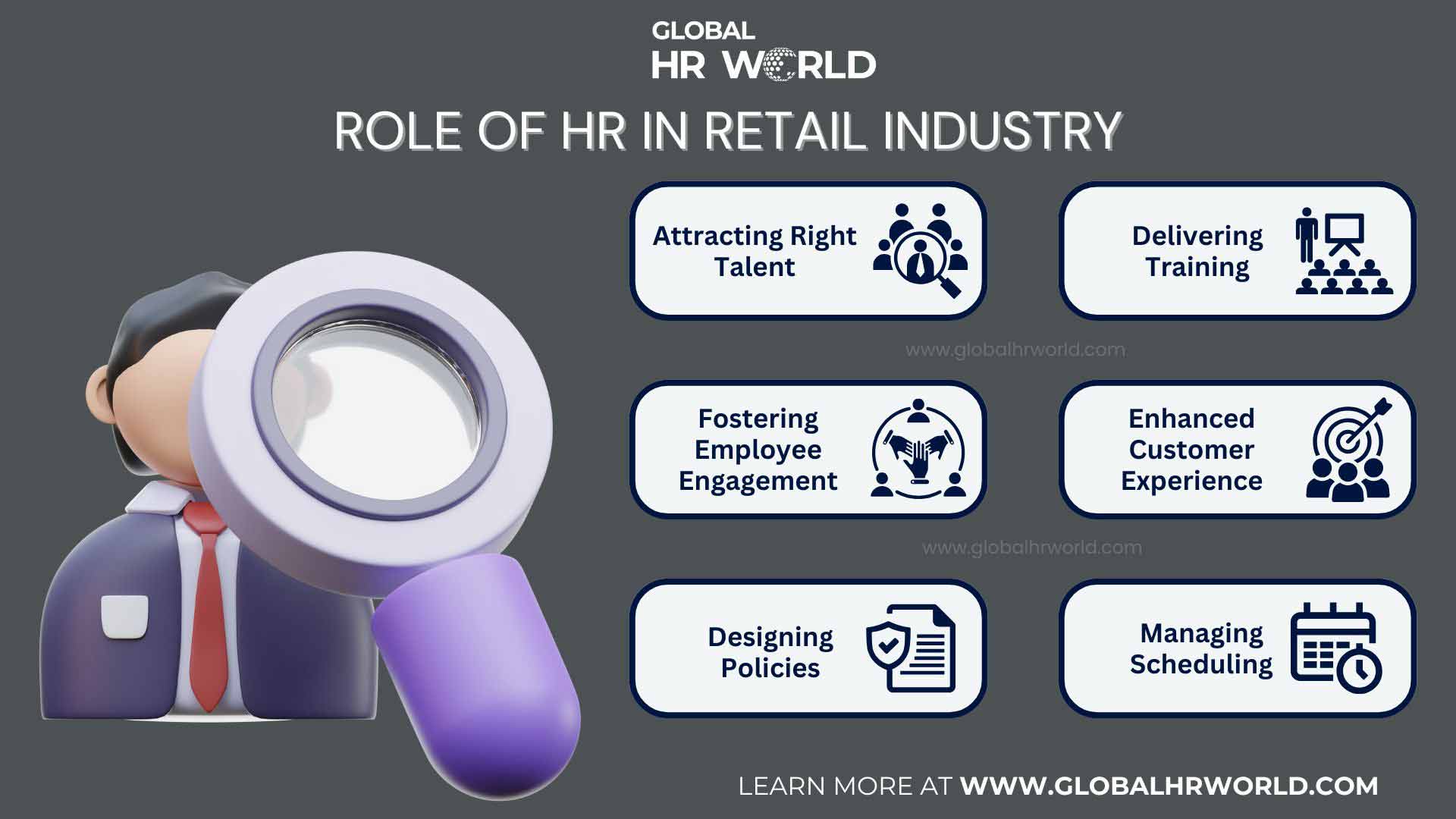
HR plays a pivotal role in the retail industry, serving as the vital link between employees and customers, who are central to the business. In fact, “80% of customers say the experience a company provides is as important as its products and services.” (Source: Invoca, as cited by Salesforce). By attracting the right talent, delivering effective training, and fostering employee engagement, HR directly contributes to the overall customer experience. Additionally, HR is responsible for designing policies, managing scheduling, and ensuring a positive work environment that enables employees to perform at their best.
Top HR Challenges in the Retail Industry and Overcoming Them
Although the role of HR in the retail industry is indispensable, they face a fair share of challenges, which, when left unaddressed, can hinder operational success. Here are some of the top HR challenges in the retail industry and tips to overcoming them.
HR Challenges in the Retail Industry #1: Workforce Planning and Scheduling During Peak Seasons
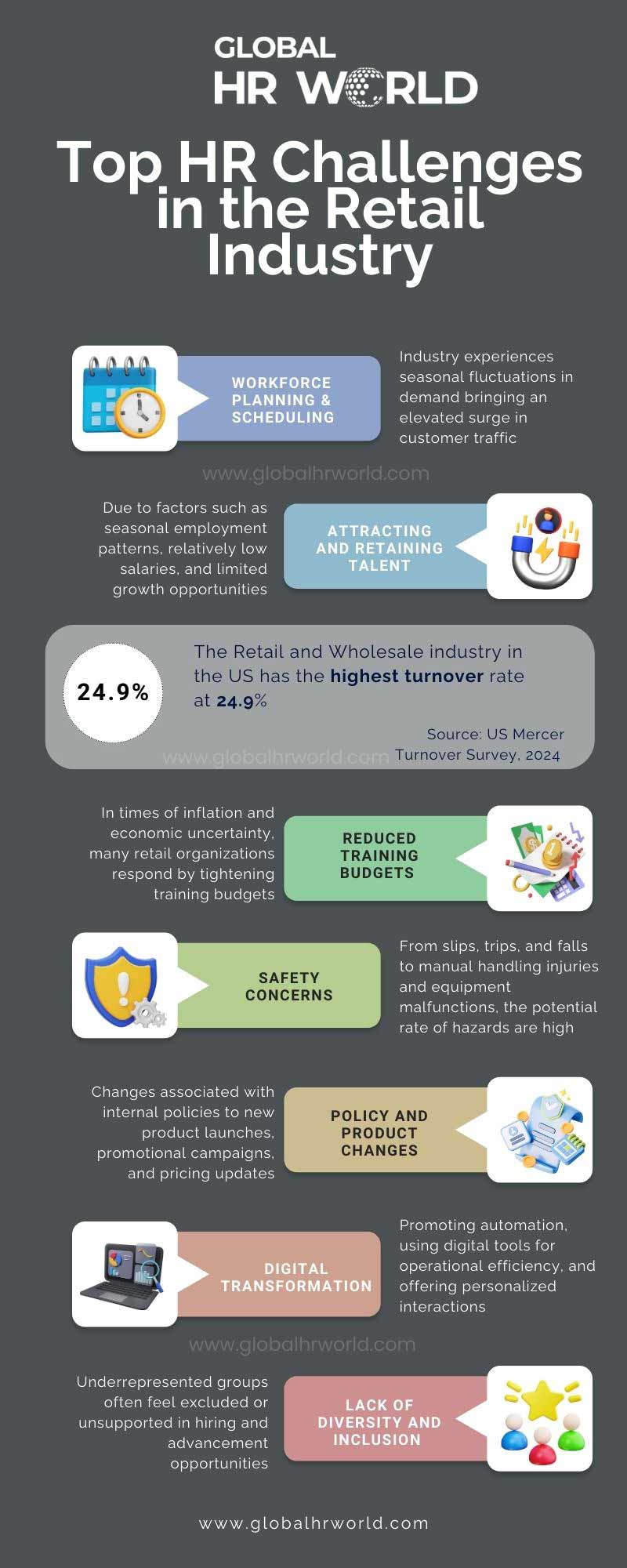
The retail industry experiences seasonal fluctuations in demand, especially during certain periods, such as holidays or major sales events, bringing an elevated surge in customer traffic. During these peak seasons, HR professionals face intense pressure to manage scheduling and workforce planning effectively. It often becomes necessary to hire additional staff, many of whom may be inexperienced or temporary, to meet increased operational needs. This calls for careful balancing of existing employees and new hires with effective tasks.
Tips to overcome:
- Incorporate AI and scheduling software to automate shift assignments to reduce manual efforts and errors.
- Build a pool of reliable talent to be utilized during seasonal shifts and encourage cross-training for them.
- Partner with staffing agencies or universities to ensure quick access to part-time staff during seasonal demands.
HR Challenges in the Retail Industry #2: Attracting and Retaining Talent
Attracting and retaining top talent remains a major challenge in the retail industry due to factors such as seasonal employment patterns, relatively low salaries, and limited growth opportunities. These issues are further intensified during periods of inflation, when rising living costs outpace wage increases, prompting employees to seek better-paying opportunities elsewhere. The 2024 US Mercer Turnover Survey found that“the Retail and Wholesale industry in the US has the highest turnover rate at 24.9%.” In addition, the retail industry is vulnerable to employee poaching and employee theft, with competitors often luring skilled staff through higher compensation or better benefits, resulting in talent shrinkage.
Tips to Overcome:
- Offer competitive pay, rewards, incentives, and additional benefits to address the efforts of employees.
- Promote opportunities for career progression by offering training, discussion forums, and feedback.
- Foster a strong workplace culture where every employee feels valued and their perspectives are heard.
- Inculcate performance management practices to align employee efforts with organizational goals.
HR Challenges in the Retail Industry #3: Reduced Training Budgets
In times of inflation and economic uncertainty, many retail organizations respond by tightening budgets, and one of the first areas to face cuts is often training and development. Employees may begin to feel stagnant, undervalued, or disconnected from growth pathways, which directly affects motivation, engagement, and retention. Apart from weakening the existing talent, the employees struggle to adapt to growing customer needs and technological advancements.
Tips to Overcome:
- Ensure low-cost outsourced training solutions to overcome budget constraints while offering development opportunities.
- Promote internal development through mentorship, job rotation, and cross-training, ways to enhance employee skills and engagement.
- Incorporate digital self-paced learning platforms to engage employees and reduce the high costs associated with traditional training methods.
HR Challenges in the Retail Industry #4: Safety Concerns
The retail industry often confronts numerous safety concerns, instilling a major HR responsibility to create and enforce safe working environments. From slips, trips, and falls to manual handling injuries and equipment malfunctions, the potential rate of hazards that endanger employees and customers is high, even resulting in reputational damage.
Tips to Overcome:
- Provide safety training for employees on the proper and judicious use of equipment and ensuring safety as a shared responsibility.
- Ensure the use of surveillance and updated safety technologies to reinforce a culture of safety.
- Inculcate the practice of regular safety checks and thorough risk assessments to proactively prevent hazards and ensure a safe environment.
HR Challenges in the Retail Industry #5: Policy and Product Changes
HR, being primarily responsible for implementing organizational policies, often bears the challenge of rolling out changes, ranging from internal policies to new product launches, promotional campaigns, and pricing updates. Apart from that, ensuring that employees quickly absorb and adapt to these changes is another significant challenge often leading missed sales opportunities, and customer dissatisfaction.
Tips to Overcome:
- Provide targeted policy and product-related training through microlearning modules, such as short, engaging videos, to empower employees with timely and easy-to-consume information.
- Establish strong communication channels to convey all policy and product-related changes, ensuring employees stay informed.
- Gather employee and customer feedback regularly to evaluate the impact of policy and product changes on these key stakeholders and make necessary adjustments.
HR Challenges in the Retail Industry #6: Digital Transformation
Delivering a strong digital experience to both employees and customers has become a competitive necessity in the retail industry. This includes promoting automation, using digital tools for operational efficiency, and offering personalized interactions. However, a major challenge arises when employees or even customers lack the necessary digital skills or show resistance to change, hindering the adoption of the technology.
Tips to Overcome:
- Stay up to date with the latest technologies and possess a solid understanding of digital tools to effectively guide and support the workforce through digital transitions.
- Upskill employees with practical knowledge of digital technologies to enhance confidence and prevent customer dissatisfaction.
- Encourage tech-savvy employees to mentor their colleagues, accelerating digital adoption process.
HR Challenges in the Retail Industry #7: Lack of Diversity and Inclusion
Another major HR challenge in the retail industry is the lack of diversity and inclusion. Underrepresented groups often feel excluded or unsupported in hiring and advancement opportunities, creating a perception that the industry is not accessible, discouraging diverse talent from pursuing careers in retail. Moreover, these gaps affect workforce morale, engagement, and customer connection associated with diverse teams.
Tips to Overcome:
- Avoid hidden biases by openly implementing inclusive hiring practices, incorporating blind recruitment.
- Provide DEI training to employees and the leadership to raise awareness and eliminate biases.
- Regularly review workplace policies to identify diversity gaps in the workplace.
Conclusion
The role of HR in the retail industry is indispensable, being responsible for a wide range of activities from recruitment and onboarding to policy implementation and performance assessment. Some of the major challenges HR professionals face include workforce planning and scheduling during peak seasons, attracting and retaining top talent, reduced training budgets because of uncertainty, safety concerns, policy and product changes, digital transformation, and lack of diversity and inclusion. Understanding the right strategies to overcome these challenges can help create a supportive work environment and improve the overall customer experience.
Infographic
Knowledge Check!
Frequently Asked Questions (FAQs)
What is the role of HR in retail industry?
By attracting the right talent, delivering effective training, and fostering employee engagement, HR directly contributes to the overall customer experience. Additionally, HR is responsible for designing policies, managing scheduling, and ensuring a positive work environment that enables employees to perform at their best.
What are the top HR challenges in the retail industry?
Some of the major challenges HR professionals face include workforce planning and scheduling during peak seasons, attracting and retaining top talent, reduced training budgets because of uncertainty, safety concerns, policy and product changes, digital transformation, and lack of diversity and inclusion.