

Cultural diversity training is increasingly important in today’s workplaces, with “more than 3 out of 4 job seekers and employees (76%) reporting that a diverse workforce is an important factor when evaluating companies” (Source: Glassdoor). Multicultural workspaces with professionals from varied demographics and ethnicities require a strong comprehension of how to interact and share perspectives while being considerate of others’ values and beliefs. This necessitates the importance of cultural diversity training, and this blog discusses in detail the need and best practices for effective cultural diversity training.
Understanding Cultural Diversity Training
Cultural diversity training is a structured training program designed to offer insights and awareness to employees about differences in terms of cultures, traditions, and perspectives, and equipping them with skills for working effectively in culturally diverse teams. Statistics suggest that “companies in the top 25% for ethnic and cultural diversity were 36% more profitable than those in the bottom quarter” (Source: McKinsey), encouraging workplaces to embrace cultural diversity. However, to enhance the inclusive atmosphere and promote a mindset that encourages recognizing the contributions of people from diverse backgrounds, cultural diversity training is essential. The training aims to foster a respectful and productive work environment by offering insights into appropriate and inappropriate ways to interact with people from various cultures.
The Need for Cultural Diversity Training
Cultural diversity training is essential for multicultural teams and workplaces where individuals interact across varied backgrounds. The need for the training includes:
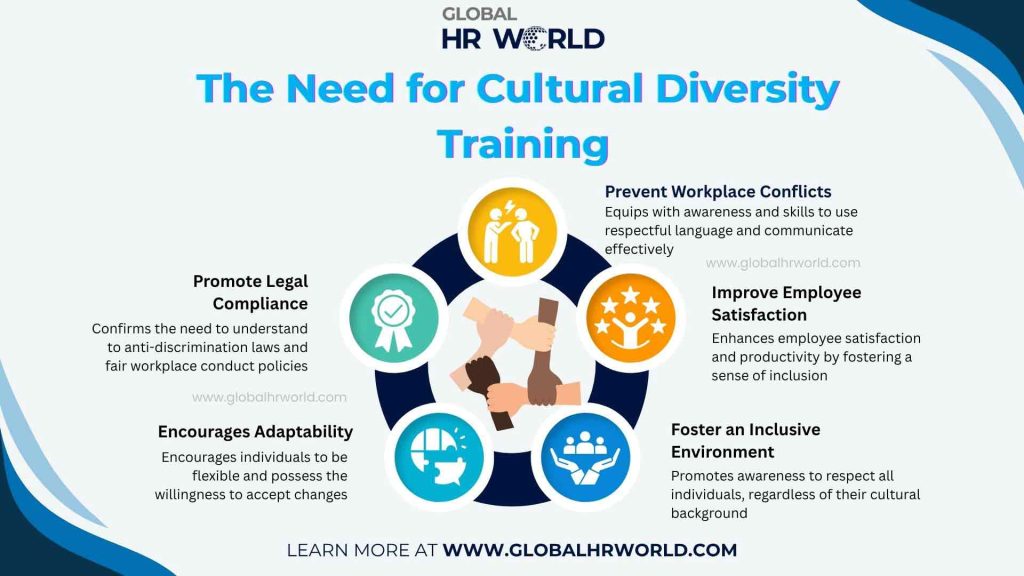
Preventing Workplace Conflicts
In teams with diverse cultural backgrounds, misunderstandings, miscommunication, and the use of culturally inappropriate language can lead to conflicts that disrupt collaboration and reduce productivity. Cultural diversity training equips employees with the awareness and skills to use respectful language and communicate effectively, preventing minor issues from escalating into major problems.
Improving Employee Satisfaction
Cultural diversity training enhances employee satisfaction and productivity by fostering a sense of inclusion and value. When employees feel understood and respected, they are more likely to share ideas, remain engaged, and stay with the organization, thereby boosting overall job satisfaction and retention.
Fostering an Inclusive Environment
Cultural diversity training promotes awareness to respect all individuals, regardless of their cultural background. It supports the creation of an inclusive environment where everyone feels empowered to share their opinions, concerns, and perspectives, contributing to organizational growth. Additionally, the training helps reduce personal biases, further fostering inclusivity.
Encouraging Adaptability
The skill of adaptability encourages individuals to be flexible and possess the willingness to accept changes. With cultural diversity training, the participants understand and adapt to different perspectives and values in various social and professional contexts.
Promoting Legal Compliance
It is essential to implement cultural diversity training for promoting legal compliance and upholding ethical standards in the workplace. The training confirms the need to understand and adhere to anti-discrimination laws and fair workplace conduct policies. Furthermore, the training reinforces ethical behaviors in the organization, ensuring equal treatment.
Areas Addressed in Cultural Diversity Training
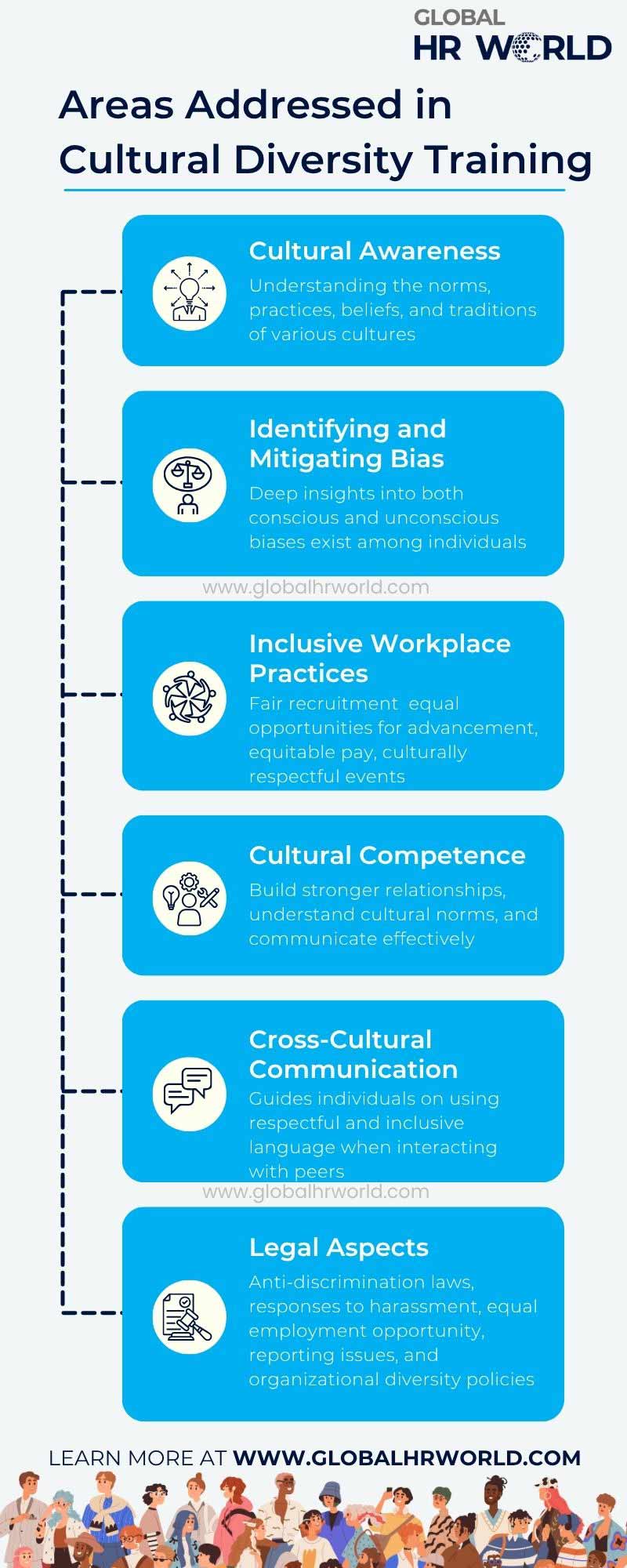
Cultural diversity training covers a wide range of topics to foster a respectful and inclusive workplace. The key areas covered in cultural diversity training are:
Cultural Awareness
A key area covered in cultural diversity training is cultural awareness, which focuses on understanding the norms, practices, beliefs, and traditions of various cultures. It further emphasizes the importance of respecting all cultures, valuing individuals regardless of their backgrounds, and approaching cultural differences with empathy.
Identifying and Mitigating Bias
A major barrier to cultural diversity in the workplace is bias. Cultural diversity training offers deep insights into both conscious and unconscious biases that exist among individuals in the workplace. Furthermore, it highlights the negative impact these biases have on productivity, trust, satisfaction, and the overall work environment. The training also emphasizes the importance of recognizing and overcoming these biases to foster an inclusive workplace culture.
Inclusive Workplace Practices
Workplaces require certain actions, behaviors, and policies that respect all individuals equally. Cultural diversity training reinforces the importance of adopting inclusive workplace practices, such as fair recruitment and hiring, equal opportunities for career advancement, equitable pay, culturally respectful events, and employee resource groups. With effective training, the professionals understand the need for highlighting these practices to make individuals feel valued, strengthen their sense of belonging, and empower them to contribute their best.
Cultural Competence
Cultural competence is essential in every organization to build stronger relationships, understand cultural norms, and communicate effectively. Cultural diversity training equips employees with the skills needed to develop cultural competence and engage respectfully in diverse work environments.
Cross-Cultural Communication
Along with cultural competence, cross-cultural communication is another key area addressed in cultural diversity training. It guides individuals on using respectful and inclusive language when interacting with peers or team members from different backgrounds, helping to prevent misunderstandings and support smooth collaboration and teamwork.
Legal Aspects
Cultural diversity training also addresses the legal aspects of workplace diversity. It covers anti-discrimination laws, responses to harassment, equal employment opportunity, reporting issues, and organizational diversity policies. Through this training, employees gain a clear understanding of the legal requirements and are encouraged to actively support cultural diversity in the workplace.
Best Practices for Impactful Cultural Diversity Training
When implementing cultural diversity training in the workplace, following certain best practices is essential to ensure meaningful outcomes and lasting impact. Let’s explore these best practices in detail:
- Conduct a needs analysis to identify training gaps and establish clear objectives and outcomes before implementation.
- Gather employee feedback on existing cultural diversity practices to identify key focus areas and inform the training program’s direction.
- Ensure the training program aligns with the organization’s existing diversity policies and DEI initiatives, while identifying ways to enhance their effectiveness and impact.
- Incorporate an inclusive curriculum that reflects diverse voices and acknowledges various cultural practices and values, while avoiding stereotypes and biases.
- Personalize cultural diversity training based on employees’ roles and responsibilities, and customize examples to reflect relevant cultural contexts, making the content more relatable.
- Incorporate KPIs and metrics to assess how well learners understand the cultural diversity training and measure its effectiveness against organizational diversity policies.
- Utilize diverse learning methods, such as role-plays, group discussions, scenarios, and case studies, to create an interactive experience that immerses employees and encourages meaningful engagement.
- Present real-world experiences that highlight the importance of cultural diversity, showcase discrimination, the role of anti-discrimination policies, and effective reporting mechanisms in addressing cultural bias and harassment in the workplace.
- Provide ongoing training with follow-up sessions to reinforce content, enhance retention, and support the practical application of cultural diversity principles in the workplace.
Conclusion
In short, cultural diversity training provides employees with awareness of different cultures and traditions while equipping them with the skills to collaborate effectively in diverse teams. Implementing the training is essential to prevent conflicts, boost employee satisfaction, foster inclusivity, encourage adaptability, and ensure legal compliance. Some key areas covered in the cultural diversity training include cultural awareness, bias mitigation, inclusive practices, cultural competence, cross-cultural communication, and legal aspects. To maximize impact, best practices such as conducting needs analysis and providing ongoing follow-up training should be followed. Well-executed cultural diversity training helps retain talent and attract new individuals to the organization.
Infographic
Knowledge Check!
Frequently Asked Questions (FAQs)
What is cultural diversity training?
Cultural diversity training is a structured training program designed to offer insights and awareness to employees about differences in terms of cultures, traditions, and perspectives, and equipping them with skills for working effectively in culturally diverse teams.
Why do organizations need cultural diversity training?
Implementing cultural diversity training is essential to prevent conflicts, boost employee satisfaction, foster inclusivity, encourage adaptability, and ensure legal compliance.
What are the key areas covered in cultural diversity training?
Some key areas covered in the cultural diversity training include cultural awareness, bias mitigation, inclusive practices, cultural competence, cross-cultural communication, and legal aspects.