

DEI initiatives are strategic values that every organization should embrace to demonstrate how it respects and values every employee, regardless of their background. These initiatives reflect the organization’s commitment to fairness and serve as the foundation for an innovative workplace. This blog outlines nine impactful DEI initiatives that organizations should implement, along with offering insights on their significance.
What is DEI?
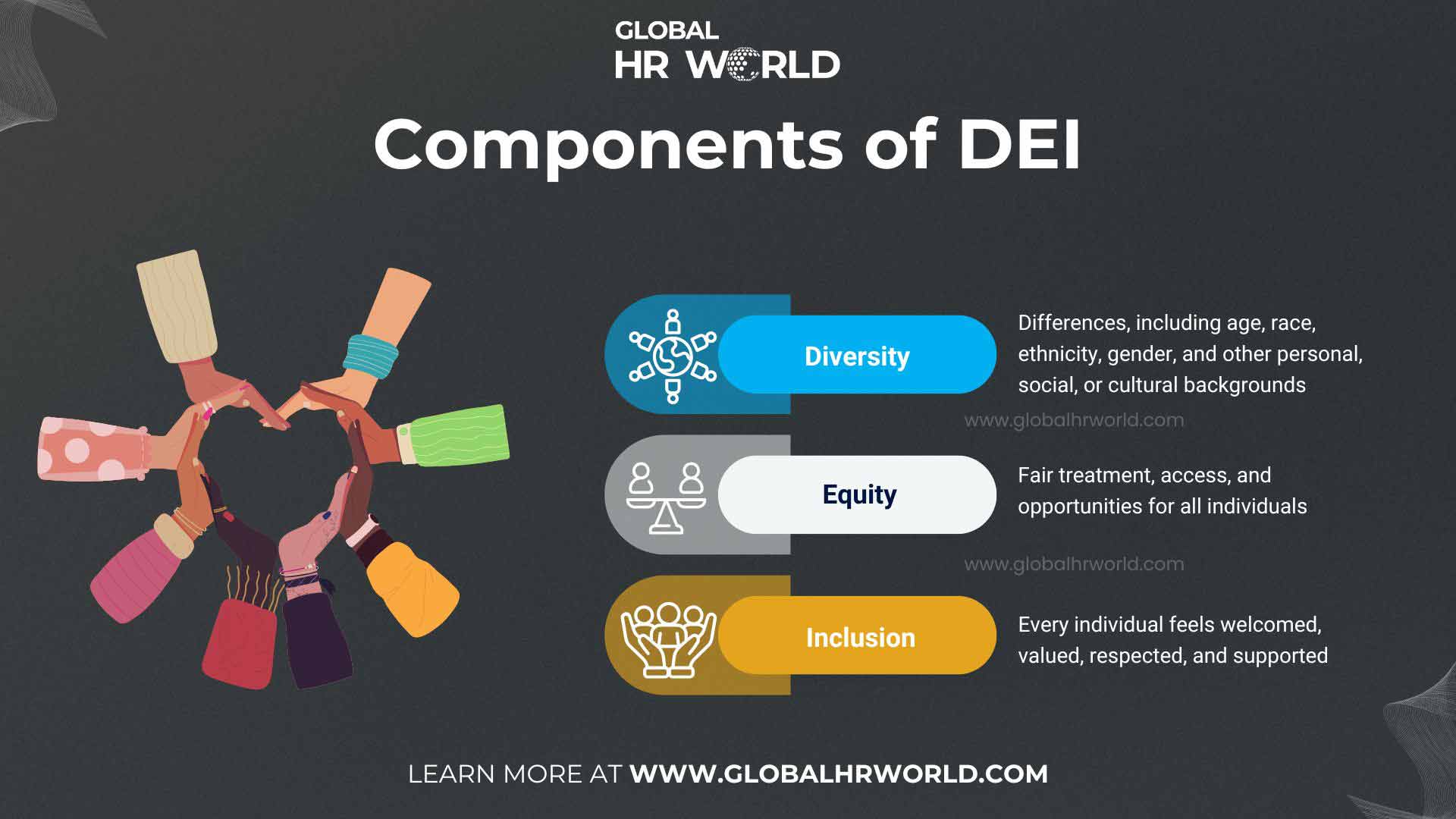
DEI or Diversity, Equity, and Inclusion refers to the representation and fair treatment of all individuals, regardless of age, race, ethnicity, gender, abilities, religion, or cultural background. In the workplace, DEI extends beyond social differences to include variations in roles, skills, experiences, and expertise. According to LinkedIn Diversity in the workplace statistics, “80% of employees want to work for a company that values DEI issues.” It ensures that everyone is valued, respected, and provided with equal opportunities irrespective of their background or personal characteristics. The different components of DEI include:
Diversity
Diversity is the differences among individuals, including age, race, ethnicity, gender, and other personal, social, or cultural backgrounds. A diverse workplace includes people from a wide range of experiences and perspectives. When an organization embraces these differences, it fosters a diverse environment.
Equity
Equity refers to fair treatment, access, and opportunities for all individuals, particularly by addressing the barriers that lead to unequal outcomes, especially for people from diverse, underrepresented, or marginalized groups. Unlike equality, which offers the same resources to everyone, equity recognizes that individuals have different needs and provides specific support and resources to help everyone achieve fair outcomes.
Inclusion
Inclusion refers to creating a harmonious environment where every individual feels welcomed, valued, respected, and supported. In the workplace, inclusion means offering belongingness to people from diverse backgrounds, ensuring their voices are heard, and their perspectives and ideas are appreciated.
Significance of DEI Initiatives
Every organization should implement DEI initiatives to ensure that all employees, from entry-level to top leadership, are hired, included, and treated fairly, regardless of their differences. These initiatives help create a workplace where everyone feels valued, respected, and recognized for their unique ideas and contributions. Here’s why DEI initiatives are essential for organizations.
Employee Engagement and Retention
DEI initiatives are vital in organizations to boost employee engagement and retention. When individuals feel valued and represented, regardless of their background, they are more likely to trust the organization. This sense of belonging strengthens their commitment, leading to higher engagement and a likelihood of long-term staying with the organization.
Attracts Top Talent
An organization’s DEI initiatives often attract top talent and strengthen its recruitment marketing efforts. Job seekers prefer to join organizations that support and respect individuals for who they are, focusing on their skills and qualifications rather than their background. A survey conducted by EY found that 74% of job seekers consider “the company’s prioritization of DEI factors into their choice of where to work.” An inclusive approach helps organizations stand out and appeal to a broader, more talented candidate pool.
Enhances Company Reputation
DEI initiatives enhance an organization’s reputation and employer brand by positively influencing how it is perceived externally, elevating its standing among competitors, and showcasing its dignity in front of others.
Contributes to Creativity and Innovation
DEI initiatives foster innovation and creativity within organizations by encouraging contributions from all individuals. It ensures inclusive participation and actively seeks feedback and diverse perspectives, encouraging a wider range of ideas and solutions.
Ensures Compliance and Reduces Legal Risks
DEI initiatives are also a key aspect of organizational compliance as they play an important role in shaping inclusive policies and help reduce legal risks associated with bias, discrimination, and underrepresentation.
9 Impactful DEI Initiatives for Every Organization
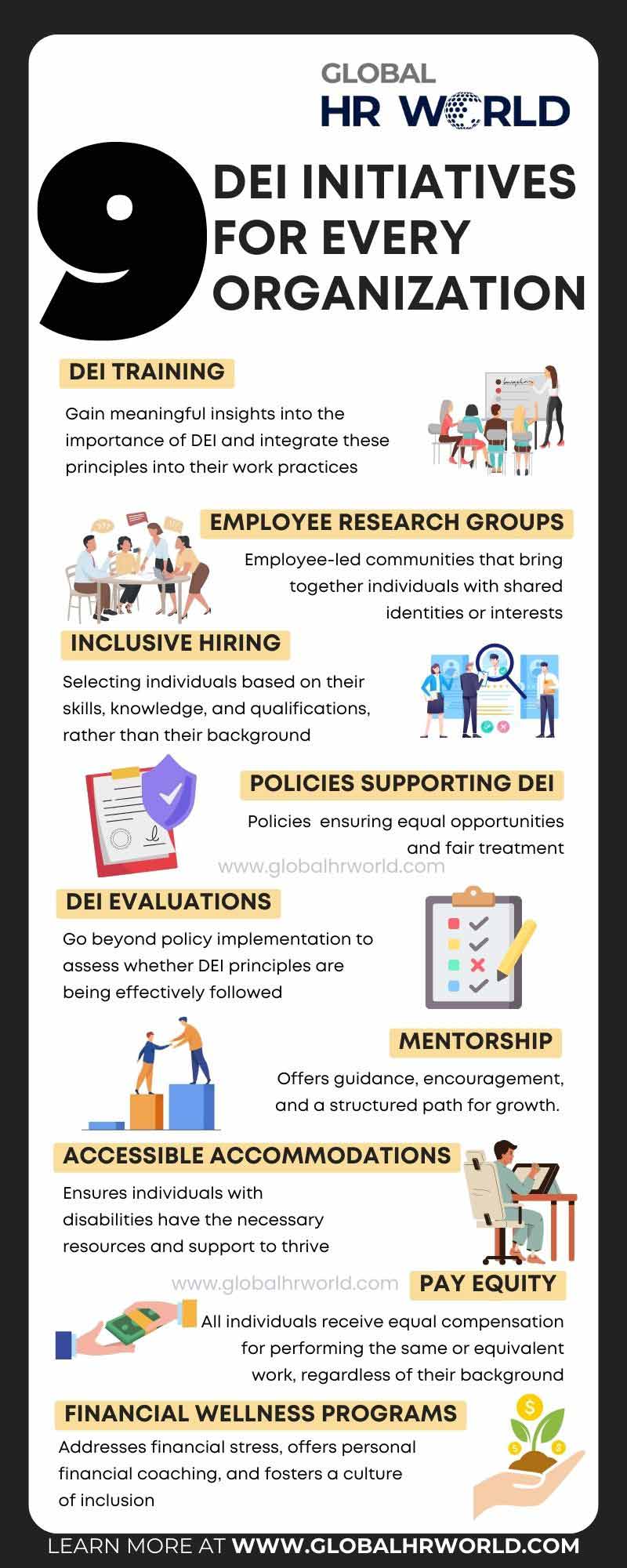
Due to the critical importance of DEI initiatives in driving engagement and reducing turnover, organizations need to implement them. Here are nine key DEI initiatives every organization should consider.
DEI Training
A major DEI initiative organization can offer to employees and leadership is DEI training. This training builds awareness along with providing knowledge and skills on topics such as unconscious bias, microaggressions, stereotypes, cultural competence, equitable pay, fair promotion practices, accessibility, inclusive hiring, gender identity, and related policies. The training ensures that employees gain meaningful insights into the importance of DEI and integrate these principles into their work practices.
Employee Resource Groups (ERGs)
ERGs are employee-led communities that bring together individuals with shared identities or interests. These groups provide a platform for mutual support, open dialogue, and the discussion of common concerns, helping to foster inclusion and a strong sense of belonging within the organization.
Inclusive Hiring
As part of DEI initiatives, inclusive hiring focuses on selecting individuals based on their skills, knowledge, and qualifications, rather than their background, culture, or personal characteristics. It ensures equal opportunities for all, including individuals with accessibility needs, fostering a diverse workforce.
Policies Supporting DEI
Implementing a DEI-supportive policy is another key initiative organizations can adopt. Such policies promote an inclusive environment by ensuring equal opportunities and fair treatment for all employees across the organization.
DEI Evaluations
Alongside policies that support DEI, it is crucial to conduct DEI evaluations. These evaluations go beyond policy implementation to assess whether DEI principles are being effectively followed and whether the organization is treating all employees fairly and equitably.
Mentorship
Providing mentorship opportunities for those in need is a DEI initiative that supports employees by offering guidance, encouragement, and a structured path for growth. Mentorship fosters trust, mutual respect, and a positive organizational culture, reinforcing a fair and inclusive environment aligned with DEI values.
Accessible Workplace Accommodations
Accessible workplace accommodation is an important DEI initiative that ensures individuals with disabilities have the necessary resources and support to thrive. This includes accommodations such as ramps, handrails, assistive technologies, and tools for individuals who are visually or hearing impaired, promoting an inclusive and supportive work environment for all.
Pay Equity
Pay equity is a major DEI initiative that ensures all individuals receive equal compensation for performing the same or equivalent work, regardless of their background, culture, or place of origin. It ensures fairness in the workplace and helps eliminate unjust pay disparities.
Financial Wellness Programs
Although an independent wellness practice, financial wellness programs are nowadays increasingly recognized as a major DEI initiative that addresses financial stress, offers personal financial coaching, and fosters a culture of inclusion through financial literacy for all.
Conclusion
In conclusion, Diversity, Equity, and Inclusion (DEI) initiatives are essential for every organization, as they drive employee engagement and retention, attract top talent, enhance the company’s reputation, foster creativity and innovation, and support legal compliance by reducing legal risks. There are nine impactful DEI initiatives that organizations can implement: DEI training, employee resource groups, inclusive hiring, DEI-supportive policies, DEI evaluations, mentorship programs, accessible workplace accommodations, pay equity, and financial wellness programs. By integrating these initiatives, organizations can cultivate a supportive and inclusive work environment where every individual is valued and respected, ultimately strengthening the organization’s overall success.
Infographic
Knowledge Check!
Frequently Asked Questions (FAQs)
What is DEI?
DEI or Diversity, Equity, and Inclusion refers to the representation and fair treatment of all individuals, regardless of age, race, ethnicity, gender, abilities, religion, or cultural background.
What is the significance of DEI initiatives?
Diversity, Equity, and Inclusion (DEI) initiatives are essential for every organization, as they drive employee engagement and retention, attract top talent, enhance the company’s reputation, foster creativity and innovation, and support legal compliance by reducing legal risks.
What are impactful DEI initiatives for every organization?
There are nine impactful DEI initiatives that organizations can implement: DEI training, employee resource groups, inclusive hiring, DEI-supportive policies, DEI evaluations, mentorship programs, accessible workplace accommodations, pay equity, and financial wellness programs.