

Accurately calculating the scope of every operation within an organization is essential for achieving sustained excellence. This underscores the importance of employing HR metrics and KPIs for measuring success. These measurements guide organizations in enhancing their operations and tracking efficiency. The subsequent paragraphs will highlight the significance and major HR metrics and KPIs for measuring success.
What are HR Metrics and KPIs?
HR metrics and Key Performance Indicators (KPIs) are essential tools and measurements used by human resources to evaluate and analyze the performance and operations of a business. Metrics are quantitative assessments that track and assess various HR activities within the organization, encompassing areas such as retention, recruitment, employee satisfaction, training, and more. KPIs, on the other hand, are more specific than metrics; they indicate how effectively the HR function is achieving its goals. KPIs highlight the strengths, weaknesses, and areas for improvement within the HR department. While the terms HR metrics and KPIs are often used interchangeably, they are not synonymous, as all KPIs are metrics, but not all metrics qualify as KPIs.
Importance of HR Metrics and KPIs
HR metrics and KPIs are crucial for measuring success and determining whether work objectives are being effectively met. Beyond this, their importance extends across various dimensions. Here are some key aspects that highlight their significance.
Enhances Decision Making
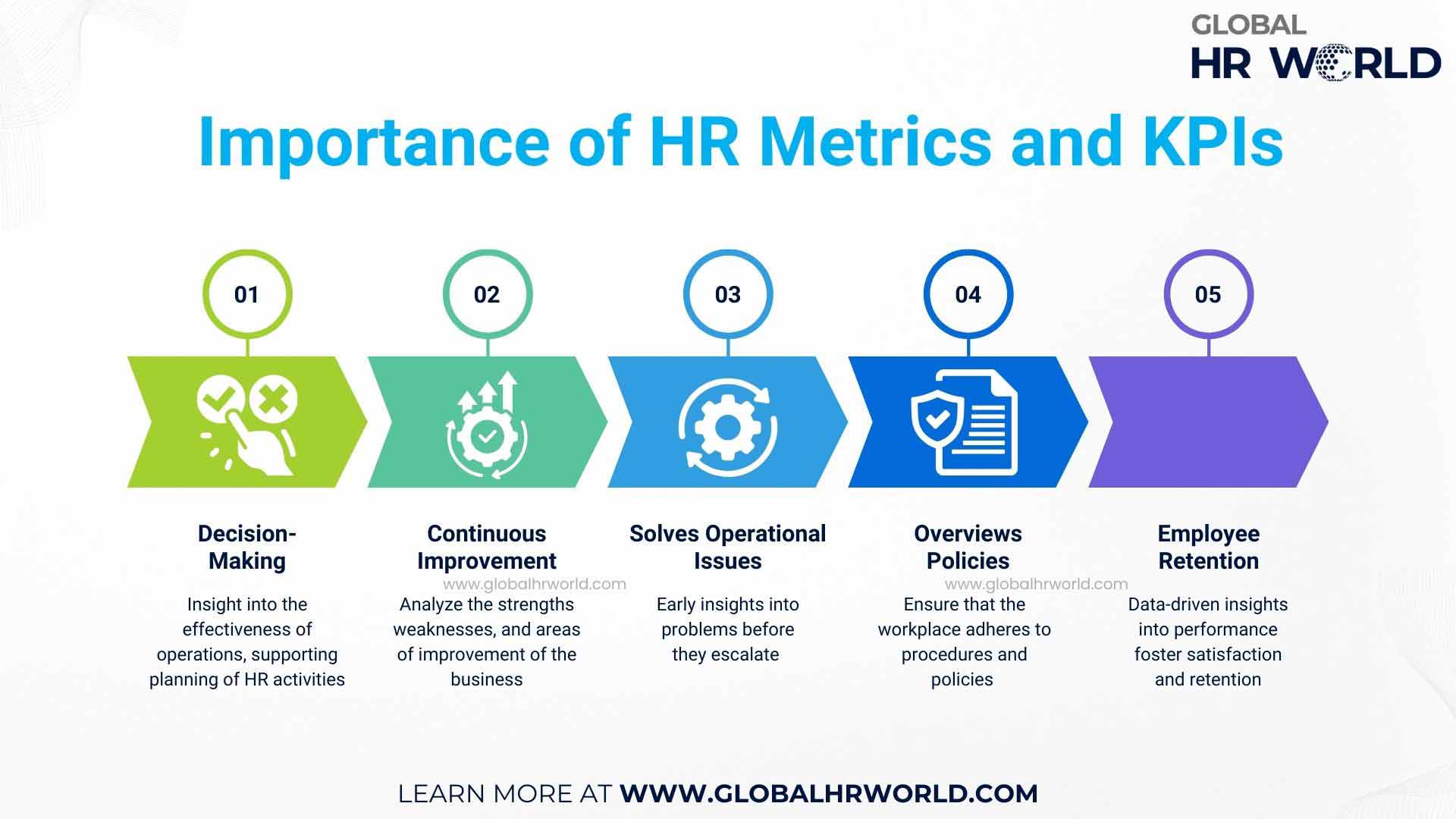
HR metrics and KPIs play a crucial role in enhancing the decision-making process. They provide insight into the success and effectiveness of operations, supporting the planning of HR activities such as recruitment, training, and performance management, along with the establishment of attainable future-oriented goals that benefit the organization.
Promotes Continuous Improvement
HR metrics and KPIs for measuring success analyze the strengths and weaknesses of the business, identifying areas that require improvement by evaluating all aspects of operations. This encourages the decision-makers to undertake relevant decisions, fostering organizational growth, ensuring a culture of continuous improvement, and creating a positive work environment.
Identifies and Solves Operational Issues
Businesses may encounter several issues that slow down overall operations, including delays in HR processes. Using HR metrics and KPIs provides early insights into these problems before they escalate into serious threats that affect the company. For instance, issues like slow hiring or high employee turnover that hinder productivity are detected and resolved. By tracking key data, HR can identify these problems early and undertake quick action to resolve them, keeping operations smooth and maintaining a strong, effective workforce.
Overviews Policies
HR metrics and KPIs also help ensure that the workplace effectively implements and adheres to the latest procedures and policies without unnecessary compromises. In addition, it assesses how well these policies and procedures are being followed by employees, identifies those that are not consistently applied, and supports the review and refinement processes of policies when necessary.
Employee Satisfaction and Retention
HR metrics and KPIs are also important as they contribute to employee satisfaction and retention. By providing data-driven insights into performance, they help employees feel motivated to improve and reassured that evaluations are fair and unbiased. This transparency fosters greater satisfaction and long-term retention of employees within the organization.
Major HR Metrics and KPIs for Measuring Success
A wide range of HR metrics and KPIs are implemented by HR teams to measure success at both the organizational and team levels. These span various areas, including talent acquisition, employee engagement and satisfaction, learning and development, and performance management, providing a comprehensive overview of HR effectiveness. Some of the major HR metrics and KPIs for measuring success are:
Cost per Hire
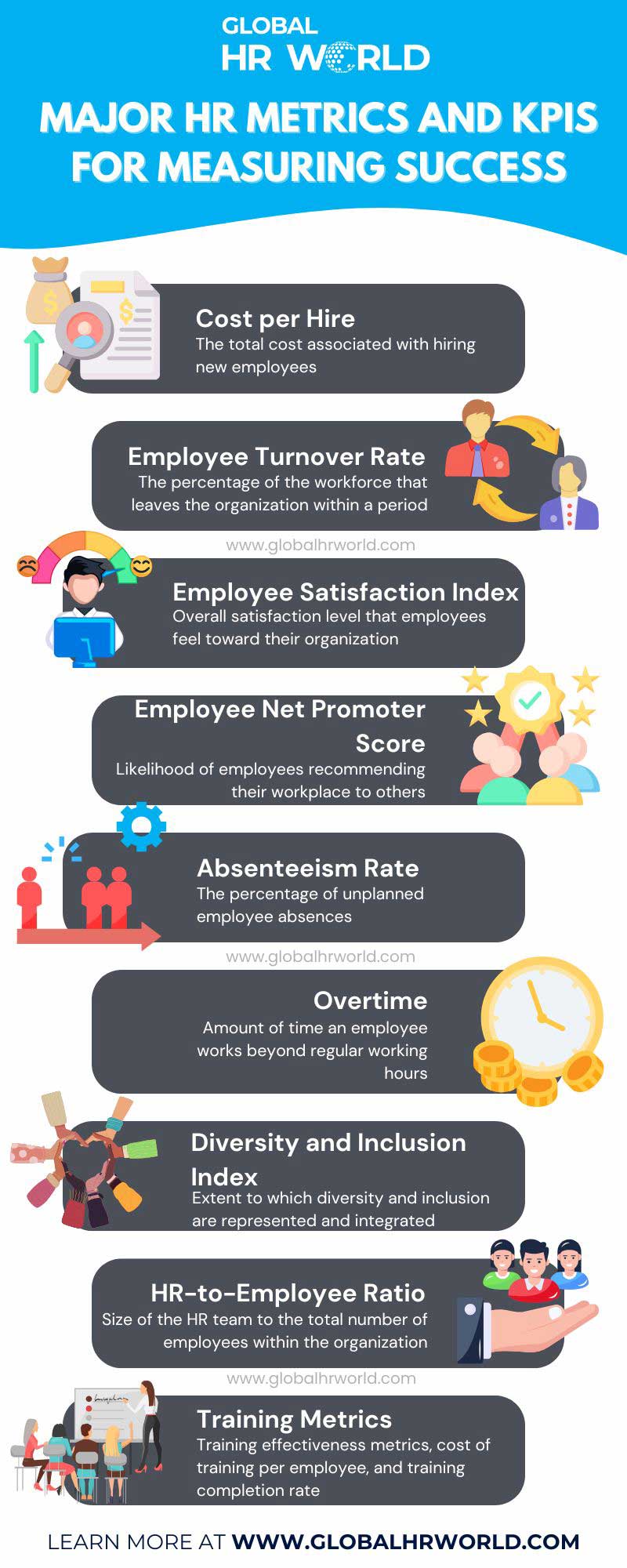
Cost per hire is a key recruiting metric used to measure the total cost associated with hiring new employees, which enables HR professionals to make informed strategic decisions when investing in recruitment activities. This cost encompasses all expenses, from sourcing candidates to onboarding, and every expenditure involved in the recruitment process is considered. Cost per hire is calculated by adding internal and external recruitment costs and dividing the total by the number of hires.
Employee Turnover Rate
According to Gallup, “42% of employee turnover is preventable but often ignored.” Employee turnover rate is another key metric used to analyze and assess the reasons employees leave an organization, enabling the implementation of strategies to improve retention. It represents the percentage of the workforce that leaves the organization within a specified period, encompassing both voluntary and involuntary turnover and the replacements for those roles. This metric is typically calculated using a standard formula, which considers the number of employees who have left and the total number of employees in the organization during that period.
Employee Satisfaction Index
Employee Satisfaction Index (ESI) refers to the overall satisfaction level that employees feel toward their organization. This metric is typically assessed through surveys or questionnaires that evaluate factors such as work experience, management, work-life balance, and other elements of the employee experience. A higher ESI indicates a more satisfied and effective workforce, reflecting a positive work environment.
Employee Net Promoter Score
Employee Net Promoter Score (eNPS) is another key employee satisfaction metric that measures the likelihood of employees recommending their workplace to others. This KPI provides insight into the organization’s effectiveness in fostering employee satisfaction, as well as its ability to gain positive recognition among the workforce. The eNPS score is calculated by subtracting the percentage of detractors from the percentage of promoters.
Absenteeism Rate
Absenteeism is a significant concern that can negatively impact organizational productivity. It often results from poor work experiences, lack of engagement, or disinterest, which cause employees to disengage from their work. The absenteeism rate calculates the percentage of unplanned employee absences, typically due to sicknesses or other unforeseen circumstances.
Overtime
Overworking can lead to employee stress and burnout. Overtime is a key KPI that measures the amount of time an employee works beyond regular working hours. It is typically calculated by subtracting standard working hours from the total hours worked. Ideally, the result should be zero; any value above zero indicates that the employee has worked overtime and needs work rescheduling.
Diversity and Inclusion Index
The Diversity and Inclusion Index is a metric used to measure the extent to which diversity and inclusion are represented and integrated within a team and the broader organization.
HR-to-Employee Ratio
The HR-to-Employee Ratio is a metric used to determine the size of the HR team to the total number of employees within the organization. It provides insight into the capacity of the HR department to support and manage the workforce effectively.
Training Metrics
Various metrics and KPIs are used to measure the effectiveness of training programs. These include training effectiveness metrics, cost of training per employee, and training completion rates. Such metrics assess the organization’s training practices and provide valuable insights for enhancing the effectiveness and efficiency of training programs.
Conclusion
In summary, HR metrics and KPIs for measuring success play a vital role in enhancing decision-making and improving the effectiveness of HR operations. Key metrics and KPIs, ranging from cost per hire to training metrics, provide critical insights that enable the HR department to take proactive and strategic steps toward continuous improvement and organizational success.
Infographic
Knowledge Check!
Frequently Asked Questions (FAQs)
What are HR metrics and KPIs for measuring success?
HR metrics and Key Performance Indicators (KPIs) are essential tools and measurements used by human resources to evaluate and analyze the performance and operations of a business.
What is the importance of HR metrics and KPIs?
HR metrics and KPIs are important because it enhances decision-making, promotes continuous improvement, identifies and solves operational issues, overviews policies, and promotes employee satisfaction and retention.