
While LMS platforms play a crucial role in modern learning programs, offering distinct benefits such as centralized training and progress tracking, LMS for small companies remains a concern due to pricing and limited upgrade options. This blog explores the importance of using an LMS for small companies, highlights the essential features an LMS should have for small companies, and reviews some of the most popular LMS for small companies.
An Overview of LMS for Small Companies
A Learning Management System, abbreviated as LMS, is defined as a learning software that aids in creating, managing, delivering, and assessing training and development programs. LMS offers a structured manner to offer L&D professionals, administrators to develop content and assess the learning outcomes, along with enabling learners and trainers to track learner progress. While LMS for large companies addresses multiple needs, such as scalability and standardizing learning across multiple departments, it benefits small companies by catering to their budget constraints and team strengths.
What is the Necessity of LMS for Small Companies?
To ensure consistent training and enhance employee productivity in the workplace, a reliable Learning Management System (LMS) is essential for small companies. Let’s explore why an LMS is a vital investment for small businesses.
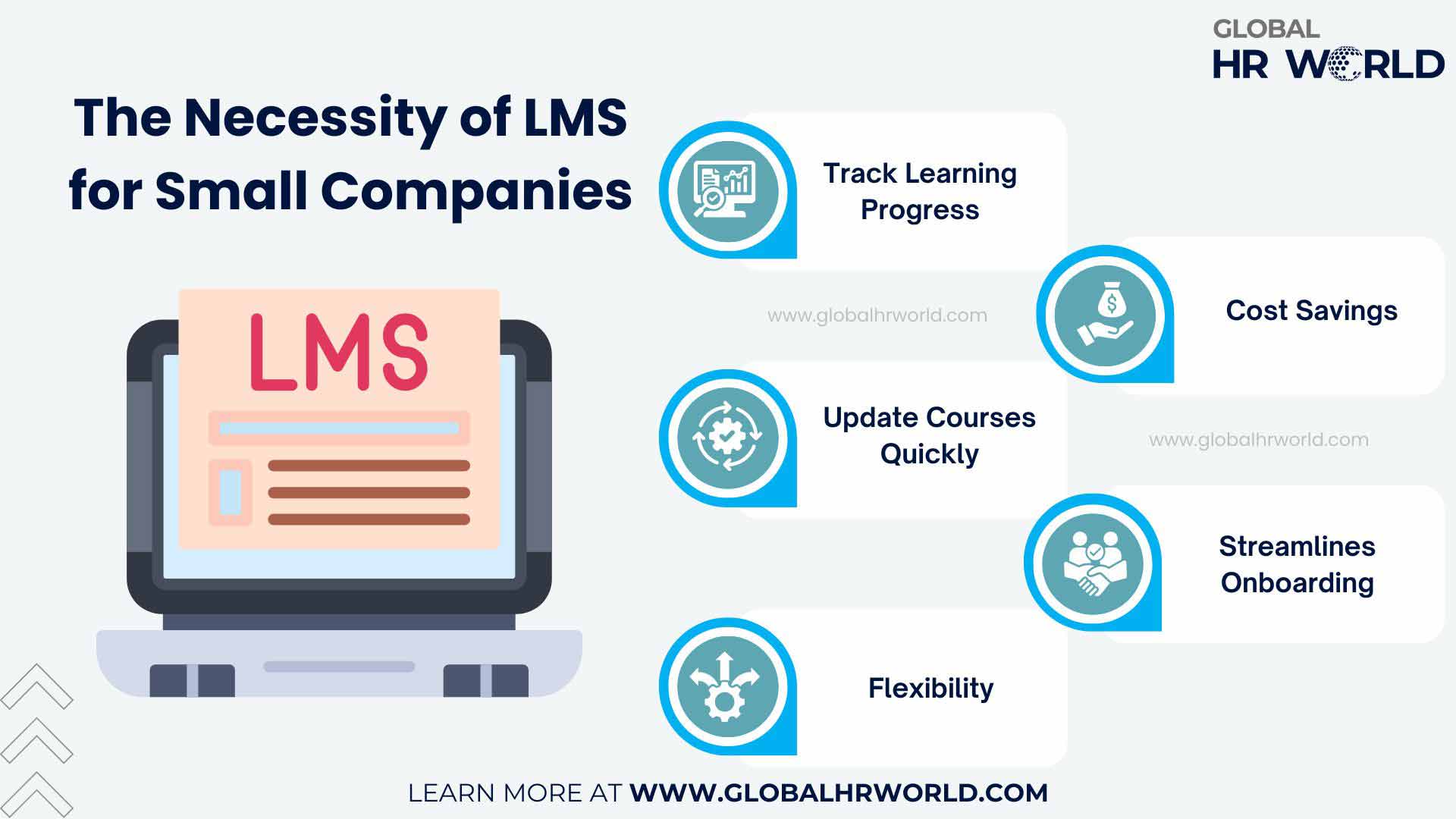
Track Learning Progress
The success of any training program depends on how well learners achieve the intended outcomes and objectives. An LMS plays a key role in this process by enabling organizations to track learner progress, measure the extent to which objectives have been met, and identify areas where improvement is needed. These clear insights into learner performance and challenges help small companies to refine their training approach and drive better results.
Cost Savings
One of the biggest challenges small organizations face is limited training budgets. Implementing an LMS can significantly reduce training costs by minimizing the need for in-person trainers, frequent course updates, and materials. Furthermore, it allows for the standardization of training content and automated assessments, making it a cost-effective solution for employee training.
Update Courses Quickly
Training programs need to be regularly updated to reflect changing scenarios, technological advancements, or industry developments. Without an LMS, updating training content often involves manual revisions, which are time-consuming, costly, and divert productive effort away from other critical tasks. In contrast, an LMS makes course updates quick and efficient, allowing small companies to keep training materials current and relevant.
Streamlines Onboarding
In addition to supporting employee training programs, an LMS streamlines the onboarding process, allowing new hires to learn seamlessly and independently. This speeds up the onboarding process without requiring someone to explain every detail manually, thereby ensuring a consistent onboarding experience for all new team members.
Flexibility
Small companies benefit greatly from an LMS due to its flexibility, allowing employees to complete training at their own pace and location. An LMS also supports personalized learning paths, catering to employees across different roles, departments, and experience levels. In addition, many LMS platforms include features like discussion forums and collaborative tools, creating a connected learning environment that encourages engagement and knowledge sharing, beneficial even for remote or hybrid teams.
Features Needed for LMS for Small Companies
The needs of small organizations differ significantly from those of large corporations. As a result, LMS platforms designed for small companies should focus on specific, essential features rather than a wide array of complex functionalities that enterprise LMSs offer. Here are some of the core features that an LMS for small companies should offer.
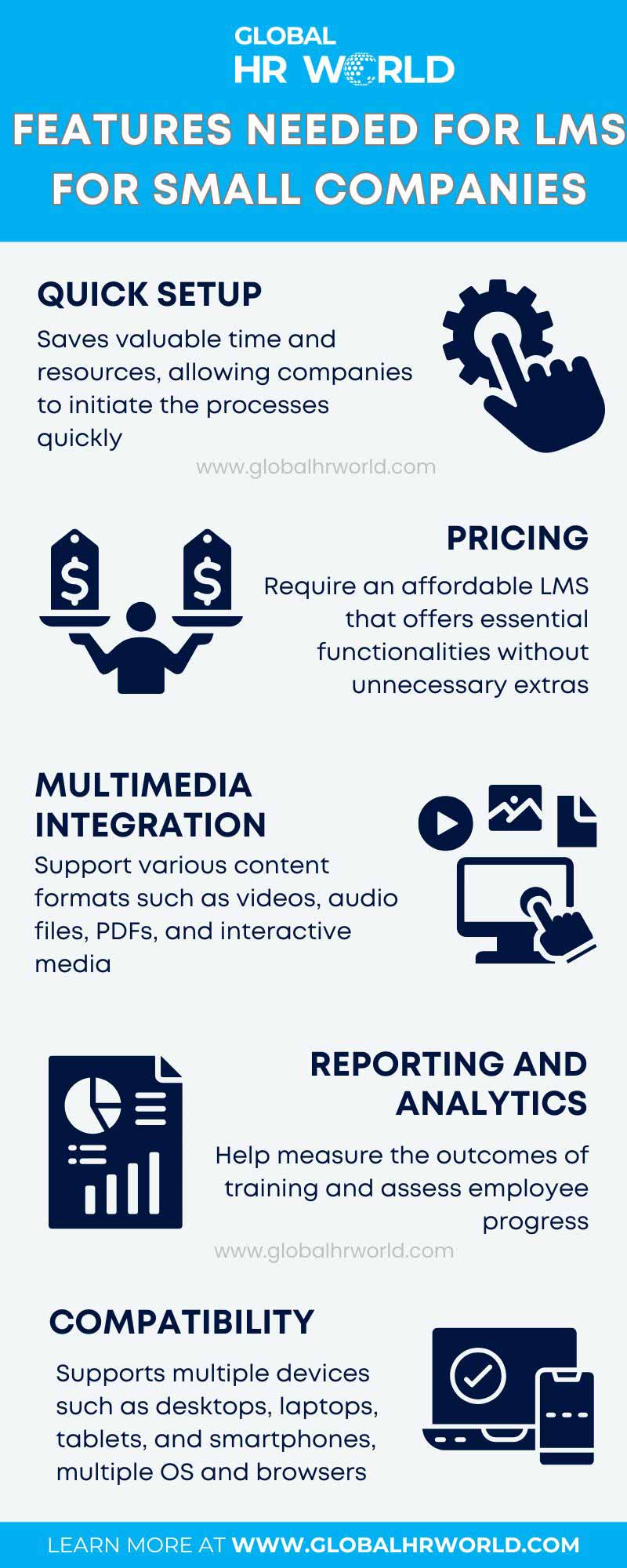
Quick Setup
One of the most important features of an LMS for small companies is quick and easy setup. Unlike large enterprises, small businesses often lack the extensive human resources to manage complex implementation processes. A user-friendly LMS with an easy setup process saves valuable time and resources, allowing companies to initiate the processes quickly, reducing operational overhead and achieving a faster return on investment (ROI).
Pricing
Pricing is a critical factor when selecting an LMS for small companies. With limited budgets and a need to control costs, small businesses often cannot afford expensive platforms with complex features but require an affordable LMS that offers essential functionalities without unnecessary spending. A cost-effective solution ensures that training remains valuable and supports business growth.
Multimedia Integration
Multimedia integration is essential for an LMS for small companies, as the platform should support various content formats such as videos, audio files, PDFs, and interactive media to make the training engaging and effective. Additionally, compatibility with industry standards like SCORM and xAPI, as well as integration with platforms like LinkedIn Learning and other third-party channels, enhances the learning experience and ensures content flexibility.
Reporting and Analytics
Reporting and analytics are a vital feature in an LMS for small companies, as they help measure the outcomes of training and assess employee progress. Through detailed insights and performance data, professionals can evaluate the effectiveness of training programs, identify skill gaps, and understand the knowledge each employee has acquired. This data-driven approach enables organizations to make informed decisions, such as determining what additional support is needed, how to personalize learning paths, and how to improve overall training efficiency by analyzing time spent and learner engagement.
Compatibility
Compatibility is a critical feature for any LMS for small companies. Apart from supporting multiple devices such as desktops, laptops, tablets, and smartphones, the LMS should also be compatible with various operating systems like Windows, macOS, iOS, Android, and popular web browsers like Chrome, Firefox, Edge, and Safari. This level of compatibility ensures that employees can access training materials from any device or platform, promoting a smooth learning experience for all users.
Popular LMS for Small Companies
There are several Learning Management Systems that combine the robust capabilities of enterprise-level platforms with the simplicity and affordability needed by small businesses. While many options are available, here are five popular LMS platforms that are well-suited to meet the specific needs of small companies.
Moodle: Moodle (Modular Object-Oriented Dynamic Learning Environment) is a free, open-source LMS that allows small companies to customize training programs, track learner progress, and benefit from strong community support.
Talent LMS: Known for its “simple, scalable, and adaptable” features is beneficial for small businesses with advanced support features.
Ispring Learn: A user-friendly LMS that enables quick deployment in just four simple steps. It features a built-in course creator, mobile learning support, a supervisor dashboard, and 24/7 technical support.
360 learning- Equally beneficial for small companies to offer real-time feedback, mobile access, AI tools, and integration with popular tools.
Litmos: Easy-to-use LMS that offers quick deployment and content integration. The major features include content authoring, custom UI branding, AI-powered support, built-in reporting and tracking, as well as social and collaborative learning.
Conclusion
In short, an LMS for small companies is essential for effortlessly creating, managing, delivering, and assessing training programs. It helps track learning progress, reduces costs, enables quick course updates, streamlines onboarding, and offers flexibility. Key features include quick setup, affordable pricing, multimedia integration, reporting and analytics, and broad compatibility. Popular LMS options for small businesses include Moodle, iSpring Learn, 360Learning, and Litmos. Investing in a suitable LMS is highly beneficial for small companies aiming to enhance their employee training and development.
Infographic