

Effective performance appraisal is essential in organizations to empower employees to attain their best performance. It is a lot more than simply giving feedback, making effective performance appraisal a comprehensive process aimed at growth and improvement. To completely comprehend what effective performance entails, including its key components, types, benefits, and benefits, and best practices, explore the insights shared throughout the blog.
What is a Performance Appraisal?
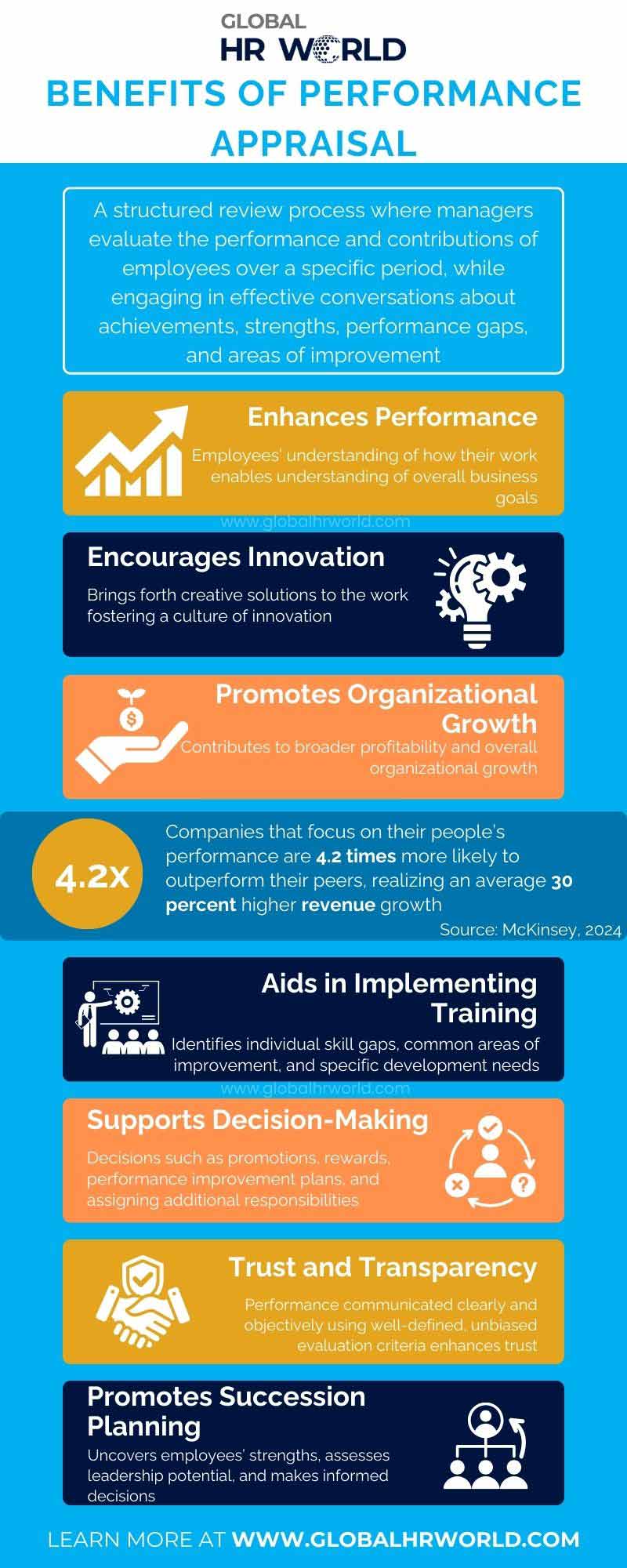
Performance appraisal or performance evaluations/reviews is a structured review process where managers evaluate the performance and contributions of employees over a specific period, while engaging in effective conversations about achievements, strengths, performance gaps, and areas of improvement. In this manner, effective performance appraisal serves as a meaningful platform for fostering performance-related discussions between employees and managers, and helping employees contribute to their highest potential.
This formal, periodic evaluation is different from performance management, which is a continuous and holistic process involving ongoing feedback to coaching, and development that lasts for a long time. Performance appraisal is a part of or an event in the organization’s ongoing performance management. While performance appraisal primarily focuses on evaluating an employee’s past performance, it also benefits the performance management process by identifying areas where support, training, or development is needed to enhance productivity.
Key Components of an Effective Performance Appraisal
An effective performance appraisal goes beyond a simple conversation between manager and employee and is a comprehensive process made up of some key components that yields results. The key components of an effective performance appraisal are:
Manager Evaluation
Manager evaluation is a central component of an effective performance appraisal. During this process, the manager observes and assesses the performance of an employee over a defined period, ensuring the evaluation remains objective, fair, and free from bias.
Evaluation Criteria
To ensure performance evaluations are unbiased and error-free, it’s essential to use a clear rubric or a set of evaluation criteria. This framework should address various aspects such as specific skills, technical abilities, professional development, and other relevant performance indicators.
Goal Setting
While the core of the performance appraisal lies in evaluating past performance, the forward-looking steps, such as setting new performance goals, outlining a development plan, and identifying areas of growth, are part of the evaluation.
Ongoing Feedback
Another key component of an effective performance appraisal is ongoing feedback, where managers or leaders offer regular input on employees’ performance, contributing to reinforcing their strengths and addressing areas of improvement.
Employee Reflection
Employee reflection is a major component of performance appraisal, often completed by the individual before or during the appraisal meeting between the employee and the manager. The individual reflects upon the achievements, challenges, and major milestones attained during the review period to share the insights with the manager.
Types of Effective Performance Appraisals
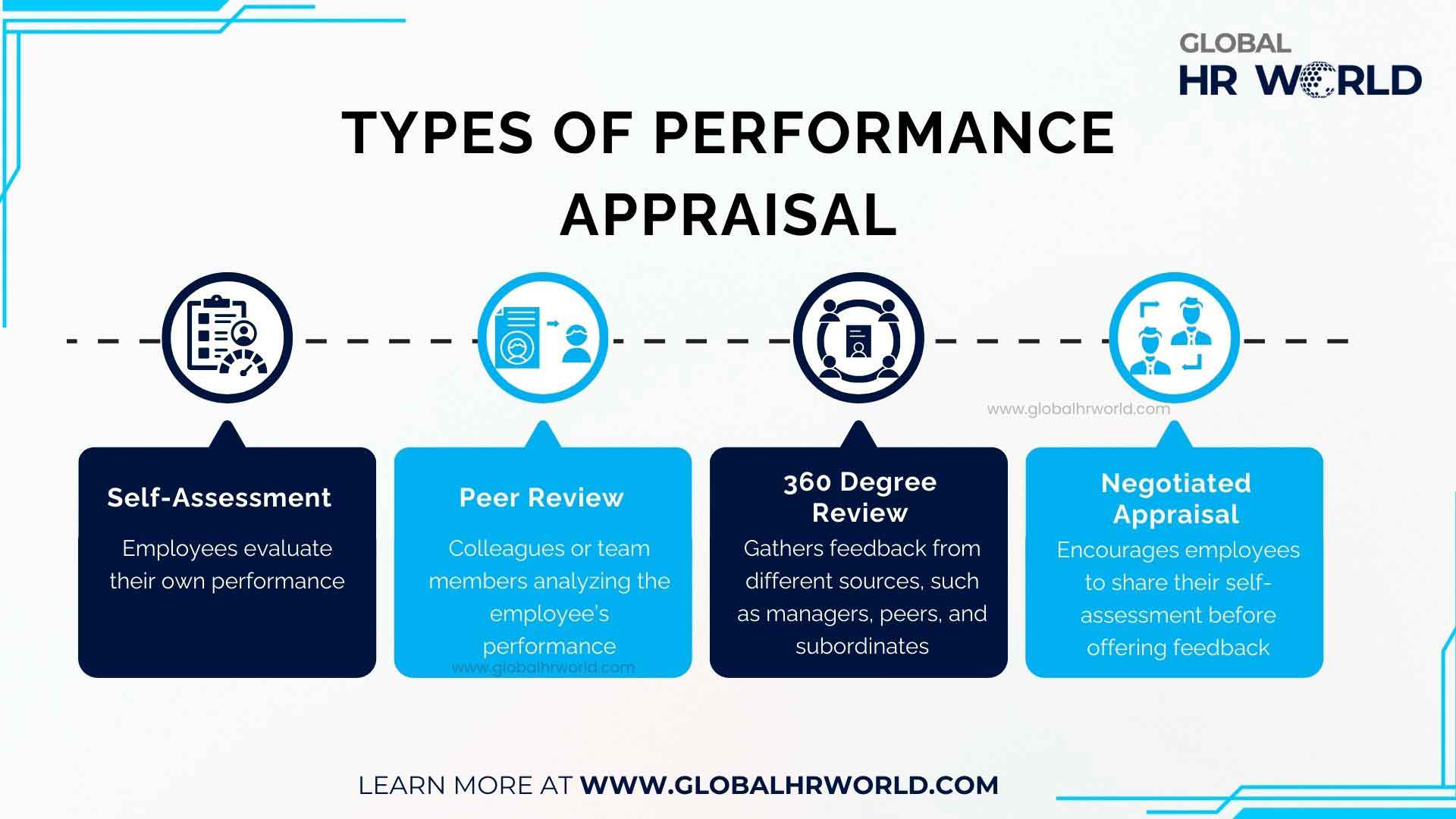
While performance appraisals are commonly seen as a manager-led evaluation of an employee’s performance, there are four different types of performance appraisals varying in structure, focus, and involvement. They are:
Self-assessment
Self-assessment is a type of performance appraisal where employees evaluate their own performance, analyzing the quality of work, goal attainment, meeting deadlines, and effectiveness in collaboration.
Peer Review
Peer review involves colleagues or team members analyzing the employee’s performance, considering their day-to-day interactions and collaboration. This type of performance appraisal is crucial as it analyses the areas that managers usually miss out, such as teamwork, communication, and interpersonal skills, enhancing teamwork.
360 Degree Review
A comprehensive performance appraisal is a method that gathers feedback from different sources, such as managers, peers, and subordinates, and analyzes the various aspects of employee performance.
Negotiated Appraisal
Negotiated appraisal is a newer appraisal trend enabling two-way conversation between manager and employee to assess the performance, and this open discussion encourages employees to share their self-assessment before the manager offers feedback.
Benefits of Conducting Effective Performance Appraisals
An effective performance appraisal delivers significant benefits across all levels of an organization, including its employees, managers, and the organization. Here are some of the key benefits it offers to both employees and the business.
Enhances Performance
A crucial benefit of conducting effective performance appraisals is that it enhances employee performance. This evaluation contributes to employees’ understanding of how their work enables understanding of overall business goals and insights into strengths, weaknesses, and areas of improvement, empowering them to make necessary adjustments on their own. Furthermore, the constructive appraisals serve as strong motivators, encouraging employees to stay engaged, thereby enhancing performance.
Encourages Innovation
When employees engage in self-reflection during performance appraisals or are provided with appropriate feedback, they are likely to strive for excellence. This often inspires them to bring forth creative solutions to the work, fostering a culture of innovation within the organization.
Promotes Organizational Growth
“Companies that focus on their people’s performance are 4.2 times more likely to outperform their peers, realizing an average 30 percent higher revenue growth.” (Source: McKinsey). When organizations actively promote performance appraisals, it not only elevates individual performance, innovation, and employee development but also contributes to broader profitability and overall organizational growth.
Aids in Implementing Training
Effective performance appraisals help identify individual skill gaps, common areas of improvement across teams, and specific development needs. Considering these insights, organizations can implement targeted training and development initiatives to upskill their talent.
Supports Decision-Making
In addition to guiding training initiatives, performance appraisals support better decision-making concerning employees by providing valuable insights on making informed choices, such as promotions, rewards, performance improvement plans, and assigning additional responsibilities to the employees.
Elevates Trust and Transparency
When employee performance is communicated clearly and objectively using well-defined, unbiased evaluation criteria, it fosters trust and transparency among all stakeholders, strengthening relationships and contributing to positive outcomes across organizations.
Promotes Succession Planning
Through effective performance appraisals, organizations engage in uncovering employees’ strengths, assessing leadership potential, and making informed decisions about the leadership potential of individuals, thus contributing to succession planning.
Best Practices in Conducting Effective Performance Appraisals
Organizations should adopt certain best practices when conducting performance appraisals to yield positive outcomes.
- Create the appraisal process with set criteria and employing SMART objectives.
- Feedback should be delivered respectfully and with empathy, confirming that the tone is constructive, not critical.
- Appraisals should not overly emphasize the negative aspects alone. Recognizing achievements and reinforcing strengths is equally important.
- Consider multi-dimensional feedback on assessments.
- During discussions, employees’ self-evaluation should be considered, as it reflects their self-awareness, confidence, and perception of their contributions.
Conclusion
In a nutshell, effective performance appraisal is a vital process for every organization. This structured review of employee performance and contributions not only enhances individual productivity but also drives innovation, supports organizational growth, and informs key decisions like training, promotions, and leadership development. An effective performance appraisal relies on core components such as clearly defined evaluation criteria, role-specific objectives, ongoing feedback, and opportunities for employee reflection.
The process is enriched through different types of appraisal methods, such as self-assessment, peer review, 360-degree review, and negotiated appraisal, each offering a unique perspective on performance. To make performance appraisals truly impactful, organizations must follow best practices such as setting SMART objectives, delivering feedback with respect and empathy, and placing a strong emphasis on both strengths and areas for improvement. When conducted thoughtfully, performance appraisals become a powerful tool for growth, both for individuals and the organization as a whole.
Infographic
Knowledge Check!
Frequently Asked Questions (FAQs)
What is a performance appraisal?
Performance appraisal or performance evaluations/reviews is a structured review process where managers evaluate the performance and contributions of employees over a specific period, while engaging in effective conversations about achievements, strengths, performance gaps, and areas of improvement.
What are the different types of performance appraisal?
The process of evaluation is enriched through different types of appraisal methods, such as self-assessment, peer review, 360-degree review, and negotiated appraisal, each offering a unique perspective on performance.