

Employee engagement activities encourage fostering commitment and boosting the overall workplace culture. When the organization actively promotes employee engagement, it positively contributes to overall effectiveness and success. This blog discusses the various employee engagement activities designed to enhance workplace engagement, alongside discussing their benefits.
What is Employee Engagement?
Employee engagement is the HR concept of measuring the level of commitment, enthusiasm, and dedication employees possess toward their work, motivating them to attain the mission and goals. Engaged employees are driven not solely by organizational benefits but by a strong intellectual and emotional connection to their work. They clearly understand their roles and responsibilities, demonstrate loyalty, and are highly motivated to deliver their best performance. Employee engagement has a significant impact on the income that “companies with highly engaged employees experience 2x higher net income than companies with poor engagement scores.”
Importance of Employee Engagement
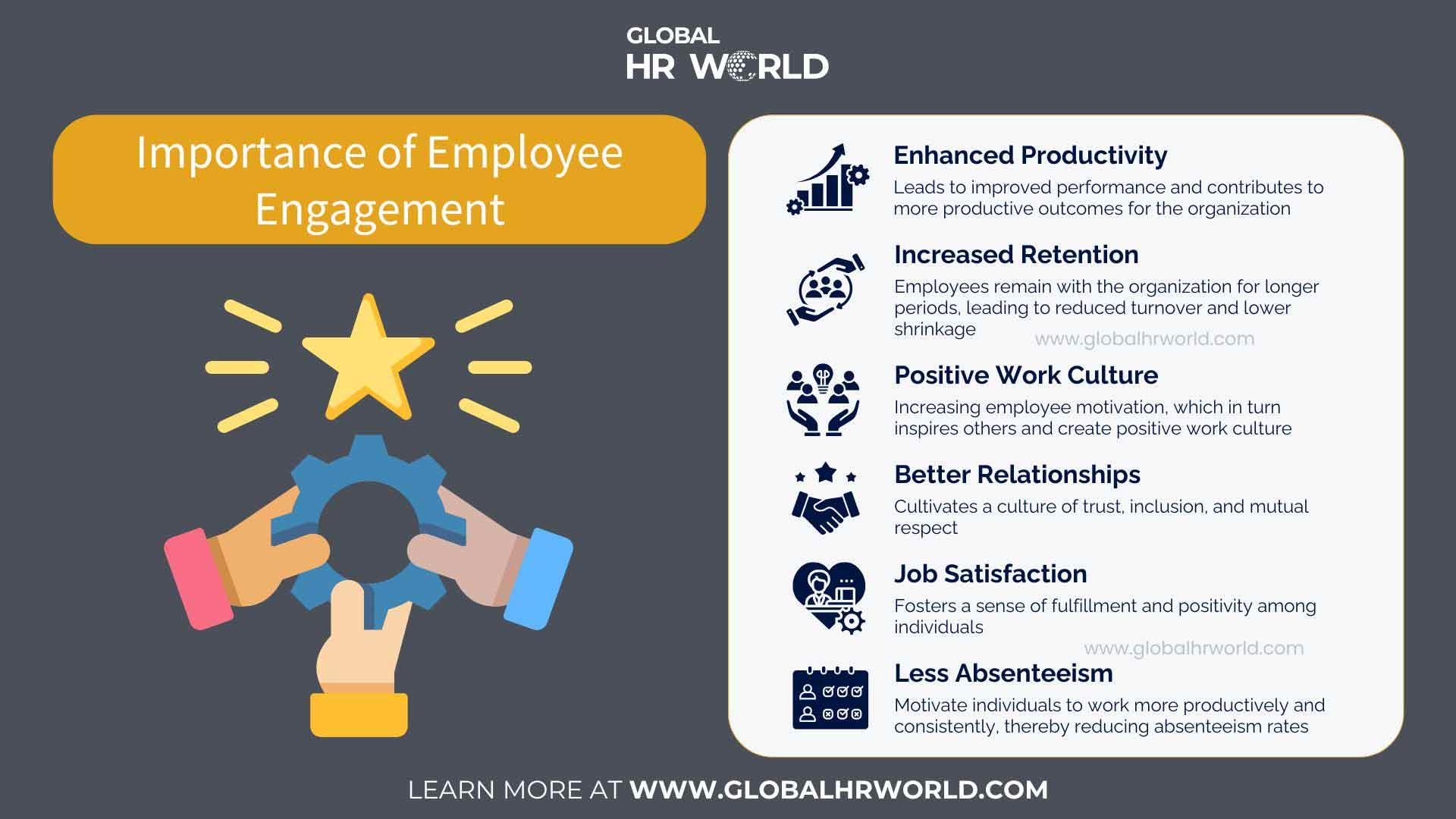
Although employee engagement contributes to the personal growth of employees and overall organizational growth, an alarming statistic by Gallup projects that the “global employee engagement declined to 21% in 2024” and “disengagement cost the world economy $438 billion.” (Source: State of Global Workplace 2025). This underscores the urgent need for organizations to prioritize employee engagement and bring it to the forefront of strategic efforts. The following are some of the reasons highlighting the importance of employee engagement.
Enhanced Productivity
One of the key benefits of employee engagement is its ability to enhance individual productivity. When employees are dedicated to their work, demonstrating increased commitment and motivation, it leads to improved performance and contributes to more productive outcomes for the organization. A Gallup study found an “18% rise in productivity” with enhanced employee engagement.
Increased Retention
Enhanced employee engagement encourages employees to remain with the organization for longer periods, leading to reduced turnover, lower shrinkage, and decreased incidents of employee theft. This stability and continuity contribute to a more productive work environment, reducing costs associated with recruiting, onboarding, and training new hires.
Positive Work Culture
Employee engagement fosters a positive work culture by increasing employee motivation, which in turn inspires others, enhances collaboration, and promotes a harmonious environment.
Better Relationships
Employee engagement not only contributes to a positive work culture but also strengthens relationships among colleagues and leadership. This, in turn, reduces workplace conflicts, supports organizational cohesion, and cultivates a culture of trust, inclusion, and mutual respect.
Job Satisfaction
Employee engagement fosters a sense of fulfillment and positivity among individuals. This satisfaction and optimistic mindset contribute to higher job satisfaction, ultimately benefiting the organization as a whole.
Less Absenteeism
Disengagement often leads to frequent or habitual absenteeism. In contrast, higher levels of employee engagement motivate individuals to work more productively and consistently, thereby reducing absenteeism rates.
Common Employee Engagement Activities
To enhance employee engagement and, in turn, drive greater organizational performance and profitability, companies can implement a range of effective activities. Here are some key employee engagement activities to consider.
Team Building Activities
A key activity to enhance employee engagement is providing stress-relief opportunities through team-building initiatives such as Escape Room challenges, Team Olympics, cultural nights, social engagement events, and ice-breaking sessions. These activities foster collaboration, strengthen workplace relationships, and encourage employees to remain focused and committed to the organization and its goals.
Employee Surveys
Conducting employee surveys and gathering feedback is a crucial activity that makes employees feel valued, heard, and included. It strengthens their connection to the organization, reveals silent dissatisfaction, fosters transparency, and provides insights that support preventive measures and targeted improvements, elevating overall engagement. However, “58% of employees still wish their companies conducted employee engagement surveys more frequently.” (Source: Achievers).
Wellness Programs
Incorporating wellness programs is another effective way to show employees they are valued, enhancing their engagement. These programs may include fitness challenges, mental health initiatives, and various wellness benefits that support employees’ overall well-being.
Career Progression Opportunities
Organizations can offer career progression opportunities to boost employee engagement. By doing so, the organization demonstrates its genuine commitment to the personal and professional growth of its employees, thereby enhancing their motivation and performance. These opportunities may include formal training sessions, online, offline, and blended learning initiatives, mentorship and reverse mentoring programs, workshops, industry speaker sessions, leadership development activities, and webinars, which contribute meaningfully to employee engagement.
Recognition Programs
Among employee engagement activities, Recognition Programs play a vital role by acknowledging and rewarding employees for their contributions and positive behaviors. These programs not only reinforce desired behaviors but also boost motivation, loyalty, and the sense of connection employees feel toward the organization, keeping them engaged throughout their tasks and activities.
Communication Activities
Effective communication within the team, particularly from management and leadership, is essential for sustaining employee engagement and commitment to the organization and their work. A survey by SHRM pointed out that “85% more engaged when leaders communicated effectively.” To strengthen the communication process, organizations can incorporate activities such as active listening workshops, storytelling sessions, communication icebreakers, and cross-team collaboration projects, all of which enhance both communication and overall engagement.
Appreciation Programs
Appreciation programs are employee engagement activities aimed at expressing gratitude for each employee’s contributions and efforts toward the team. These may include thank-you notes, team lunches, employee shout-out boards, and surprise gifts. Appreciation programs help build trust, foster a sense of belonging, strengthen team relationships, and enhance overall engagement.
Community Involvement
Organizations can foster employee engagement by involving them in community-focused activities that align with the company’s mission and broader goals. These initiatives promote a sense of purpose and demonstrate the organization’s commitment to social responsibility. Activities such as volunteering, fundraising events, eco-friendly initiatives, charity runs, health fairs, and coaching programs for disabled youth contribute to employee engagement while supporting the well-being of the wider community.
Casual Moments
Among employee engagement activities, incorporating casual and light-hearted moments can be highly effective. Activities such as “Meme of the Day” contests, emoji story challenges, potluck lunches, cultural feasting days, emoji challenge shows, mystery gift drops, and themed dress-up days foster collaboration, encourage equal participation, and ultimately enhance engagement and morale in the workplace.
Apart from activities, the initiatives like work-life balance, encouraging hybrid work, different benefits, contribute to employee engagement.
Conclusion
To sum up, employee engagement activities play a vital role in boosting commitment, enthusiasm, and dedication among employees toward their work and the organization. They contribute significantly to enhanced productivity, higher retention, a positive work culture, stronger relationships, increased job satisfaction, and reduced absenteeism. Common employee engagement activities include team-building activities, employee surveys, wellness programs, career progression opportunities, recognition programs, communication initiatives, appreciation efforts, community involvement, and casual engagement moments. Incorporating these activities benefits both the organization and its employees, fostering a more motivated and connected workforce.
Infographic

Knowledge Check!
Frequently Asked Questions (FAQs)
What is employee engagement?
Employee engagement is the HR concept of measuring the level of commitment, enthusiasm, and dedication employees possess toward their work, motivating them to attain the mission and goals.
Why is employee engagement important?
Employee engagement contributes significantly to enhanced productivity, higher retention, a positive work culture, stronger relationships, increased job satisfaction, and reduced absenteeism.
What are the common employee engagement activities?
Common employee engagement activities include team-building activities, employee surveys, wellness programs, career progression opportunities, recognition programs, communication initiatives, appreciation efforts, community involvement, and casual engagement moments.