

Creating a culture of open communication is essential for every workplace, as it enables the workforce to maintain trust and deliver productive outcomes. However, certain barriers hinder creating a culture of open communication. This blog explores those barriers, along with offering insights on the need and strategies for creating a culture of open communication in the workplace.
What is Open Communication?
An open communication is a transparent communication style where individuals express their thoughts openly and honestly, encouraging dialogue and active listening. It differs from the restricted closed communication style and mostly ensures top-down communication only. In the workplace, creating a culture of open communication encourages everyone to speak up their perspectives, irrespective of their levels. For instance, leaders share company updates and policies while employees communicate their opinions, feedback, and perspectives. Open communication is vital in the workplace, as “a staggering 86% of employees cite ineffective communication and poor internal communication skills for workplace failures” (Source: Sociabble).
The Need for Creating a Culture of Open Communication
Due to the inefficiencies and misunderstandings that arise from a lack of proper expression, it is essential for organizations to foster a culture that encourages open communication. Here are some of the reasons why creating a culture of open communication is vital for long-term success.

Strong Team Dynamics
Open communication fosters strong team dynamics by encouraging transparency, trust, and active participation. When everyone is empowered to share ideas and feedback openly, individuals feel motivated, valued, and included. This sense of trust strengthens team relationships and contributes to a cohesive work environment.
Higher Productivity
Productivity is the measure of efficiency of the work, and it is elevated through creating a culture of open communication with reduced misunderstandings, enhanced team dynamics, and trust, encouraging employees to stay committed to the work.
Promotes Inclusion
Open communication gives everyone a voice, allowing employees at all levels to contribute their ideas, share perspectives, and raise concerns. This inclusive approach empowers individuals and promotes a culture of respect, mutual understanding, and collaboration.
Encourages Adaptability
Adaptability is the ability to adjust to new conditions and changes. Through consistent open communication, including sharing updates, gathering feedback, and providing solutions, organizations can cultivate open-mindedness and resilience among employees, strengthening the organization’s ability to adapt.
Strengthens Problem-Solving
Creating a culture of open communication in organizations contributes to problem-solving by clearly communicating the issue, avoiding miscommunication, uncovering the underlying cause for the problem, and implementing valuable solutions after discussing with the team.
Fosters a Positive Culture
Open communication fosters a positive organizational culture grounded in empathy and mutual respect. This environment further strengthens team dynamics, promotes inclusion, and enhances adaptability across all levels, boosting the organization’s brand reputation and credibility.
Barriers to Creating a Culture of Open Communication
While creating a culture of open communication brings numerous benefits, such as a positive work environment and stronger collaboration, certain barriers can hinder its development and need to be addressed. Some common barriers to open communication are:
Fear of Judgement
One major barrier to fostering a culture of open communication in organizations is the fear of judgment. Employees may hesitate to share their thoughts, concerns, or feedback out of concern for how others might perceive them, leading to silencing valuable perspectives and hindering effective collaboration within the organization.
Rigid Hierarchy
Overemphasis on rigid hierarchy by some leaders and managers is a key barrier to open communication. This can lead to information hoarding, limited feedback, and poor communication of updates, changes, and policies resulting in misunderstandings, decreased trust, and reduced team engagement.
Time Constraints
Perceived time constraints can hinder open communication as leaders may view open discussions, multi-channel updates, and feedback collection as time-consuming processes. Consequently, they may resort to making quick decisions without consulting employees, leading to misunderstandings, a lack of transparency, and decreased employee commitment.
Lack of Proper Channels
Lack of reliable platforms for sharing information and feedback hinders honest and transparent communication within organizations. Without proper communication channels, employees lack the opportunity to engage in meaningful dialogue.
Limited Communication Skills
Limited communication skills hinder open communication. While many employees understand the importance of expressing themselves, they may fail to communicate respectfully or persuasively. Without the skills to convey thoughts, while being mindful of others’ emotions and respecting personal boundaries, misunderstandings can occur, hindering open communication.
Strategies for Creating a Culture of Open Communication
To overcome these barriers and foster a strong culture of open communication, it’s essential to implement effective strategies. Some practical and commonly used approaches that organizations can adopt to promote open and transparent communication are:
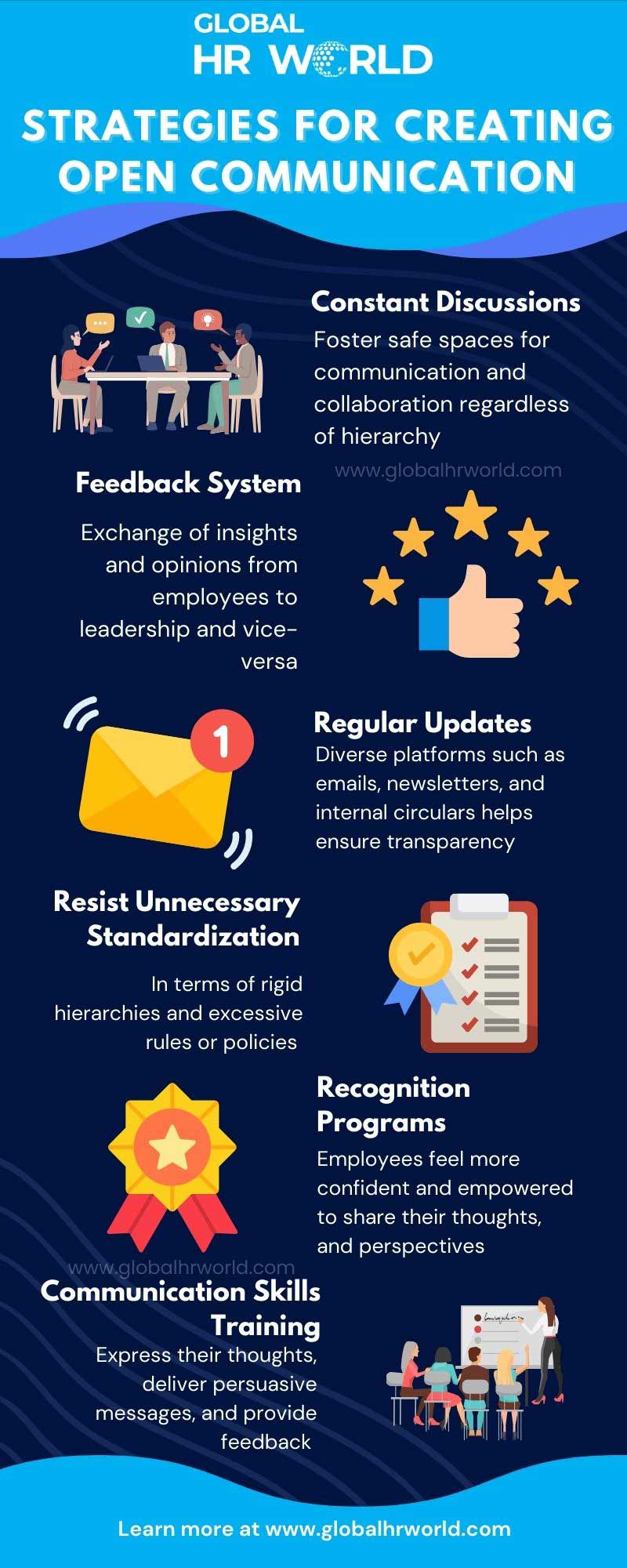
Constant Discussions
Encourage ongoing discussions within the organization by allowing every employee to speak up, share their perspectives, and engage in open dialogue. Furthermore, foster safe spaces for communication and promote collaboration across all levels, regardless of hierarchy. Regular discussions help ensure that employees feel confident in professionally voicing their thoughts, free from fear of judgment, while promoting trust and psychological safety.
Feedback System
A strong feedback system is essential for fostering a culture of open communication. It facilitates the exchange of insights and opinions from employees to leadership, as well as from leadership to employees. Moreover, it assures employees that their voices are valued and that they can share feedback in a secure environment. Apart from gathering feedback, it is equally important to take visible, positive action based on the feedback received to strengthen open dialogue.
Regular Updates
In addition to fostering ongoing discussions, it is crucial to provide regular updates to employees about company policies, changes, and new developments. Conveying information through diverse platforms such as emails, newsletters, and internal circulars helps ensure transparency and keeps everyone informed. This consistent communication makes employees feel valued and included, reinforcing their sense of belonging within the organization.
Resist Unnecessary Standardization
An effective strategy for creating a culture of open communication is to resist unnecessary standardization, particularly in terms of rigid hierarchies and excessive rules or policies that restrict open dialogue. Reducing these barriers encourages transparent and meaningful communication across all levels of the organization.
Recognition Programs
Implementing an Employee Recognition Program for achievements, milestones, and performance not only motivates employees and builds trust but also fosters a workplace culture that values and respects everyone equally. This sense of appreciation encourages open communication, as employees feel more confident and empowered to share their thoughts, ideas, and perspectives.
Communication Skills Training
Another key strategy is to offer communication skills training that goes beyond emphasizing the importance of communication. The training equips employees with the tools to effectively express their thoughts, deliver persuasive messages, and provide constructive feedback without causing emotional harm. Furthermore, it focuses on building empathy and emotional intelligence, thereby empowering employees to engage in transparent and honest communication.
Conclusion
In a nutshell, open communication is vital for allowing individuals to express their thoughts openly and honestly. Open dialogue strengthens team dynamics, boosts productivity, promotes inclusion, encourages adaptability, enhances problem-solving, and contributes to a positive workplace culture. However, barriers such as fear of judgment, rigid hierarchies, and lack of communication channels can hinder this effort. By implementing key strategies, such as encouraging ongoing discussions, establishing strong feedback systems, providing regular updates, minimizing unnecessary standardization, recognizing employee achievements, and offering communication skills training, organizations can successfully create and sustain a culture of open communication.
Infographic
Knowledge Check!
Frequently Asked Questions (FAQs)
What is open communication?
An open communication is a transparent communication style where individuals express their thoughts openly and honestly, encouraging dialogue and active listening.
What is the need for creating a culture of open communication?
Open dialogue strengthens team dynamics, boosts productivity, promotes inclusion, encourages adaptability, enhances problem-solving, and contributes to a positive workplace culture.
What are the strategies for creating a culture of open communication?
Implementing key strategies, such as encouraging ongoing discussions, establishing strong feedback systems, providing regular updates, minimizing unnecessary standardization, recognizing employee achievements, and offering communication skills training can create a culture of open communication.