

Recruiting new talent is essential for any organization aiming to strengthen and elevate its workforce. The success of the efforts in recruiting and hiring candidates is largely dependent on the collaboration between two key players: hiring manager vs recruiter. While their roles may seem similar, they serve distinct functions in the talent acquisition process. This blog discusses in detail the differences between hiring manager vs recruiter and how they collaborate to ensure effective hiring, streamline the recruitment process, and integrate the right talent into the organization for enhanced productivity and long-term success.
Understanding Recruitment and Hiring
Before delving into the differences between a hiring manager vs recruiter, it is vital to understand what recruitment and hiring are. Although recruitment and hiring form essential parts of the talent acquisition process aiming to fill a job opening with the most suitable candidate, there is a significant difference between the two. Recruitment refers to the process of attracting and finding candidates suiting a job position.
It involves the processes of identifying hiring needs, creating job descriptions and ads, sourcing out qualified candidates, screening applications and resumes, and conducting initial-stage interviews. Hiring, on the other hand, is the final stage of recruitment focusing on finalizing the selection and bringing the candidate to the organization. It involves final interviews with the shortlisted candidates, selecting the best fit for the role, sending out the offer letter, and onboarding and welcoming the new joiner into the organization.
Who is a Hiring Manager?
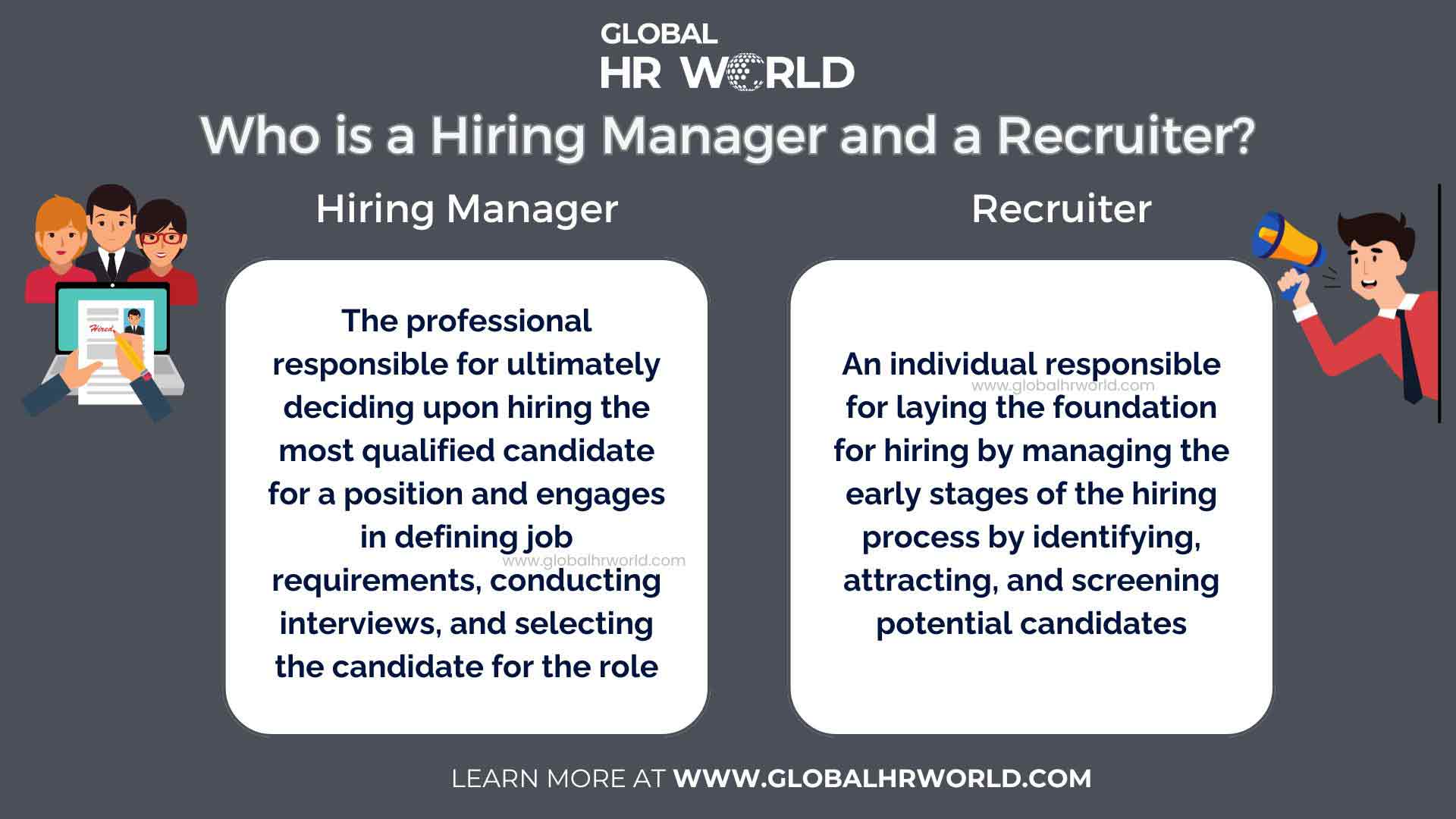
A hiring manager is the professional responsible for ultimately deciding upon hiring the most qualified candidate for a position and engages in defining job requirements, conducting interviews, and selecting the candidate for the role. Hiring managers, as the name implies are managers or team leaders of the department with an open position who know in-depth about the position and essential skills.
Who is a Recruiter?
A recruiter is an individual responsible for laying the foundation for hiring by managing the early stages of the hiring process by identifying, attracting, and screening potential candidates in the organization. The job of a recruiter is to help a hiring manager by simplifying the recruitment process.
Differences in the Hiring Duo: Hiring Manager vs Recruiter
Talent acquisition and integration to the team is incomplete with the duo; hiring manager and recruiter. However, there are key distinctions between the two in terms of position, responsibilities, involvement in the hiring process, skillsets required by both, and the tools used. Understanding these distinctions is vital for the organizations as well as for job seekers to understand the recruitment process clearly. The following are the major differences between a hiring manager vs recruiter.
Hiring Manager vs Recruiter: Difference in Position
Hiring Manager
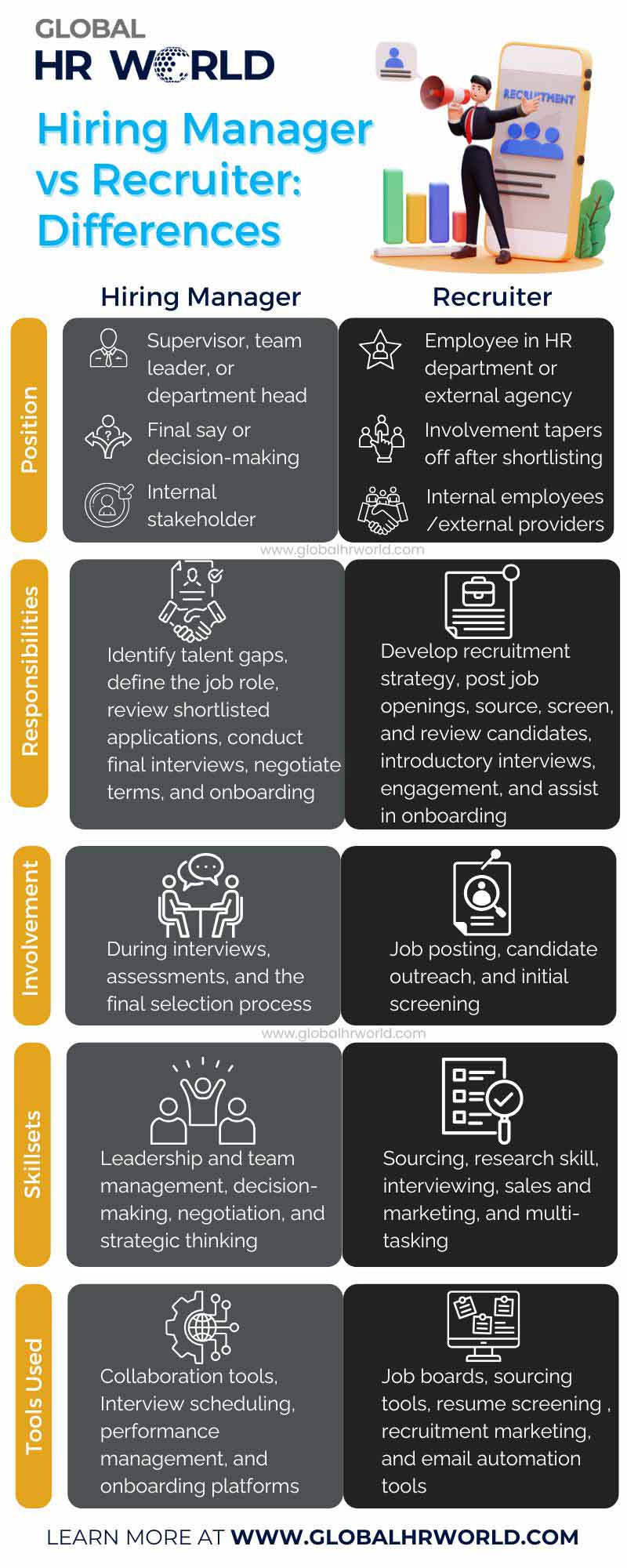
- The hiring manager is typically the supervisor, team leader, or department head who possesses a deeper understanding of the role that needs to be filled and is well aware of the skills, experiences, and knowledge level expected from the candidates to succeed in the team.
- They hold the final say or decision-making concerning who needs to be hired.
- Hiring manager, being the leader of the team with an open position is an internal stakeholder.
Recruiter
- The recruiter is positioned within the HR or Talent Acquisition department of an organization or work for a recruiting agency.
- They manage overall hiring but once the candidates are shortlisted and passed along, their involvement tapers off.
- Recruiters can be internal employees or external service providers based on the organization’s hiring structure.
Hiring Manager vs Recruiter: Difference in Responsibilities
Responsibilities of a Hiring Manager
The major responsibilities of the hiring manager include:
- Identify Talent Gaps: The hiring manager is responsible for recognizing skill shortages, workforce gaps, or upcoming team needs that require new hires and initiate the hiring process.
- Define the Job Role: Clearly outline the roles and responsibilities, expectations, and required qualifications for the position along with collaborating with recruiters to create a compelling job description.
- Review Shortlisted Applications: Evaluate the applications pre-screened by the recruiter by assessing the experience, qualifications, and providing feedback on the shortlist along with deciding whether the candidates should move forward to the next stage.
- Conduct Final Interviews: Conduct final interviews with shortlisted candidates to assess their technical expertise and team alignment.
- Negotiate Terms: Collaborate with HR to discuss and agree on final offer details.
- Organize Onboarding: Ensure smooth integration of the new hire to the team by coordinating the onboarding process and assigning initial tasks.
Responsibilities of a Recruiter
The major responsibilities of the recruiter include:
- Develop Recruitment Strategy: Plan and execute effective strategies by determining the best channels, tools, and methods to recruit candidates.
- Post Job Openings: Publish detailed job listings highlighting the responsibilities qualifications, and expectations on various platforms such as job boards, company websites, and social media.
- Source, Screen, and Review Candidates: Recruiters actively search for potential candidates through various channels, screen incoming applications, identify qualified candidates, and build a shortlist of top talent.
- Conduct Introductory Interviews: Carry out phone screenings or virtual interviews to evaluate the candidate’s basic qualifications and overall fit.
- Candidate Engagement: Maintain regular communication with applicants to provide updates, answer queries, and a positive candidate experience.
- Assist in Onboarding: Support the hiring manager in onboarding by ensuring necessary documentation and assisting in orientation.
Hiring Manager vs Recruiter: Difference in Involvement
Hiring Manager
The heightened involvement of the hiring manager in the recruitment process occurs during interviews, assessments, and the final selection process.
Recruiter
A recruiter is most involved in the hiring process at the beginning with job posting, candidate outreach, and initial screening.
Hiring Manager vs Recruiter: Difference in Skillsets
Although both the hiring manager and recruiter require communication skills, attention to detail, time management, and interpersonal skills, there are certain differences in skills for hiring manager and recruiter.
Skills of Hiring Manager
The skills unique to hiring managers include leadership and team management, decision-making, negotiation, and strategic thinking.
Skills of Recruiter
The skills unique to recruiters include sourcing, research skill, interviewing, sales and marketing, and multi-tasking.
Hiring Manager vs Recruiter: Difference in Tools Used
There are many tools used by hiring managers and recruiters. Application Tracking System (ATS) is a major software tool used by recruiters to post jobs and screen candidates and hiring managers to review shortlisted candidates and leave feedback.
Tools used by Hiring Manager
A hiring manager may utilize collaboration and feedback tools such as Slack, Microsoft Teams, and Trello, Interview scheduling tools; Calendly and GoodTime, performance management tools, and onboarding platforms.
Tools used by Recruiter
A recruiter may utilize tools such as job boards; LinkedIn Recruiter, Indeed, Glassdoor, and Naukri, sourcing tools, resume screening tools, recruitment marketing tools, and email automation tools like Mailchimp.
Hiring Manager vs Recruiter: Collaboration in Talent Acquisition
For a successful talent acquisition process, the hiring manager and recruiter can collaborate bringing effectiveness to the entire process. This strategic interaction should begin from the initial stage with the hiring manager offering insight on the team’s talent needs, skills, and ideal candidate profile, and the recruiter managing communication, sourcing, and screening of the candidates. This combined partnership can bring valuable talents to the organization contributing best.
Moreover, recruiters and hiring managers leverage the latest trends and technologies such as Applicant Tracking Systems (ATS) and AI to enhance the effectiveness of the recruitment and hiring processes. According to the LinkedIn 2025 Future of Recruiting Report, “73% of talent acquisition pros agree that AI will change the way organizations hire.” Utilizing these strategies, recruiters and hiring managers can ensure quality hires.
Conclusion
Hiring managers and recruiters play unique yet complementary roles in the recruitment process. From defining job requirements and sourcing talent to making final hiring decisions, their collaboration ensures the right candidates are brought on board effectively. They differ in terms of their roles, positions, level of involvement, skill sets, and tools they use. The collaboration between the duo is crucial for building high-potential, high-performing teams.
Infographic
Knowledge Check!
Frequently Asked Questions (FAQs)
Who is a hiring manager?
A hiring manager is the professional responsible for ultimately deciding upon hiring the most qualified candidate for a position and engages in defining job requirements, conducting interviews, and selecting the candidate for the role.
Who is a recruiter?
A recruiter is an individual responsible for laying the foundation for hiring by managing the early stages of the hiring process by identifying, attracting, and screening potential candidates in the organization.
What is the difference between a hiring manager and a recruiter?
A hiring manager is typically a team leader who defines job roles, interviews candidates, and makes the final hiring decision. A recruiter, often part of HR or an agency, manages the initial hiring steps like sourcing, screening, and coordinating interviews. While recruiters handle early recruitment stages, hiring managers step in for assessments, decisions, and onboarding. Both roles use tools like ATS but differ in focus, responsibilities, and involvement.
A hiring manager is typically a team leader who defines job roles, interviews candidates, and makes the final hiring decision. A recruiter, often part of HR or an agency, manages the initial hiring steps like sourcing, screening, and coordinating interviews. While recruiters handle early recruitment stages, hiring managers step in for assessments, decisions, and onboarding. Both roles use tools like ATS but differ in focus, responsibilities, and involvement.