

Creating a work-life balance for remote employees is just as important as for on-site personnel, as it drives productivity. A healthy balance boosts job satisfaction and enhances overall performance across the organization. This blog will offer an in-depth exploration of the importance of creating a work-life balance for remote employees and effective strategies for creating it.
What is Work-Life Balance?
Work-life balance is defined as the balance in managing time and efforts in the professional scenario without hindering personal commitments. Possessing a healthy work-life balance enables professionals to meet professional goals, as well as allotting adequate time for family, self-care, and leisure. However, the rate of work-life imbalance is alarming, as “one in three workers (33%) said they do not have enough flexibility at work to keep their work life and personal life in balance” (Source: APA Work in America Survey, 2024). Offering support in balancing the equilibrium between profession and personal life is essential for attaining organizational success.
Elements of Work-Life Balance
Effective work-life balance encompasses certain elements that contribute to individuals equally weighing professional and personal lives. These elements include:
Time Management
Time management is a crucial element of work-life balance and involves effectively allocating time for both professional responsibilities and personal activities. This means determining the time to be dedicated to work and personal life and managing both in a way that prevents overlap and promotes overall well-being.
Clear Boundaries
Setting clear boundaries between work and personal life is an essential element for maintaining work-life balance. It involves allocating a professional space and intentionally separating work responsibilities from personal time, such as stepping away from work atmosphere during non-working hours and engaging fully in work during designated work hours.
Supportive Work Environment
Work-life balance is not solely an individual responsibility. A supportive work environment that actively encourages employees to maintain this equilibrium is a vital necessity for organizational success.
Flexibility
A large majority of professionals look for the factor of flexibility in their jobs, as it offers the autonomy to manage their work schedules, take appropriate breaks, and perform tasks aligned with productive hours.
Stress Management
Alongside work-life balance comes stress management, the ability of individuals to manage the workplace demands while ensuring mindfulness and mental clarity.
Importance of Creating a Work-Life Balance for Remote Employees
While creating work-life balance is important for all professionals, it becomes even more critical for remote employees. The absence of physical boundaries, the constant pressure to be always available, and often limited communication can disrupt their ability to maintain balance. These challenges impact the well-being of remote employees and can have negative consequences on overall organizational performance. The following points highlight the importance of creating a work-life balance for remote employees.
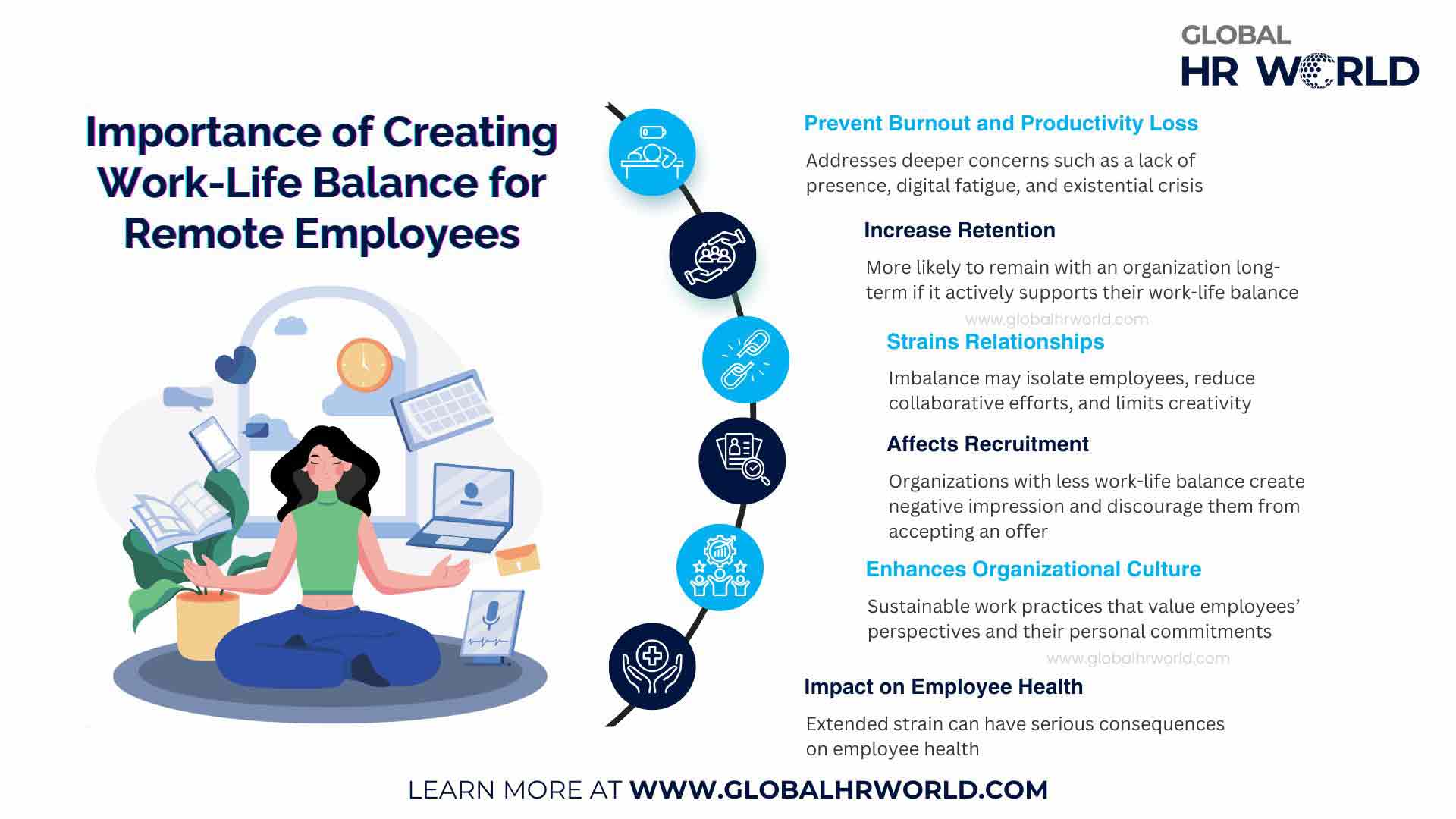
Prevent Burnout and Productivity Loss
Establishing a work-life balance for remote employees is essential, as it helps prevent burnout and productivity loss, often associated with remote work. In addition, it addresses deeper concerns such as a lack of presence, digital fatigue, and existential crisis that can arise in isolated work settings. It is crucial for organizations alike to actively promote and invest in a healthy work-life balance to mitigate these challenges.
Increase Retention
Employees are more likely to remain with an organization long-term if it actively supports their work-life balance. Statistics suggest that 33% of employees with a positive work-life balance plan to stay at their current jobs.” (Source: Hubstaff). This is more visible, particularly in remote settings, where the line between work and personal life is often blurred or barely visible, underscoring the need for a balanced work environment
Strains Relationships
Work-life imbalance strains not only the personal relationships of individuals but also negatively impacts professional relationships as well. In remote settings, where team interaction is already limited, this imbalance may further isolate employees, reduce collaborative efforts, and limit creativity, ultimately affecting the organization’s innovation and progress.
Affects Recruitment
Creating a work-life balance is a critical factor that job seekers consider when evaluating potential employers, especially for remote roles. If applicants perceive that an organization does not actively invest in promoting a healthy work-life balance, it can impart a negative impression and discourage them from accepting an offer. For instance, “57% to 61% consider negative work-life balance stopping them from taking a job offer” (Source: Hubstaff).
Enhances Organizational Culture
Promoting sustainable work practices that value employees’ perspectives and respect their commitments fosters a positive organizational culture. This inclusive approach attracts talent and enhances employee engagement, along with contributing to improved overall performance.
Impact on Employee Health
In remote work settings, where work hours often lack clear boundaries, employees are more prone to overworking. This extended strain can have serious consequences on their health, including cardiovascular problems, chronic mental health conditions, sleep deprivation, and other lifestyle-related diseases. These issues can gradually diminish employees’ cognitive and productive abilities and, in severe cases, cause long-term health complications.
Strategies for Creating a Work-Life Balance for Remote Employees
Creating a work-life balance for remote employees supports employee well-being and reinforces a culture of harmony and inclusivity. Organizations can implement it by adopting well-defined strategies such as:
Comprehensive Leave Policy
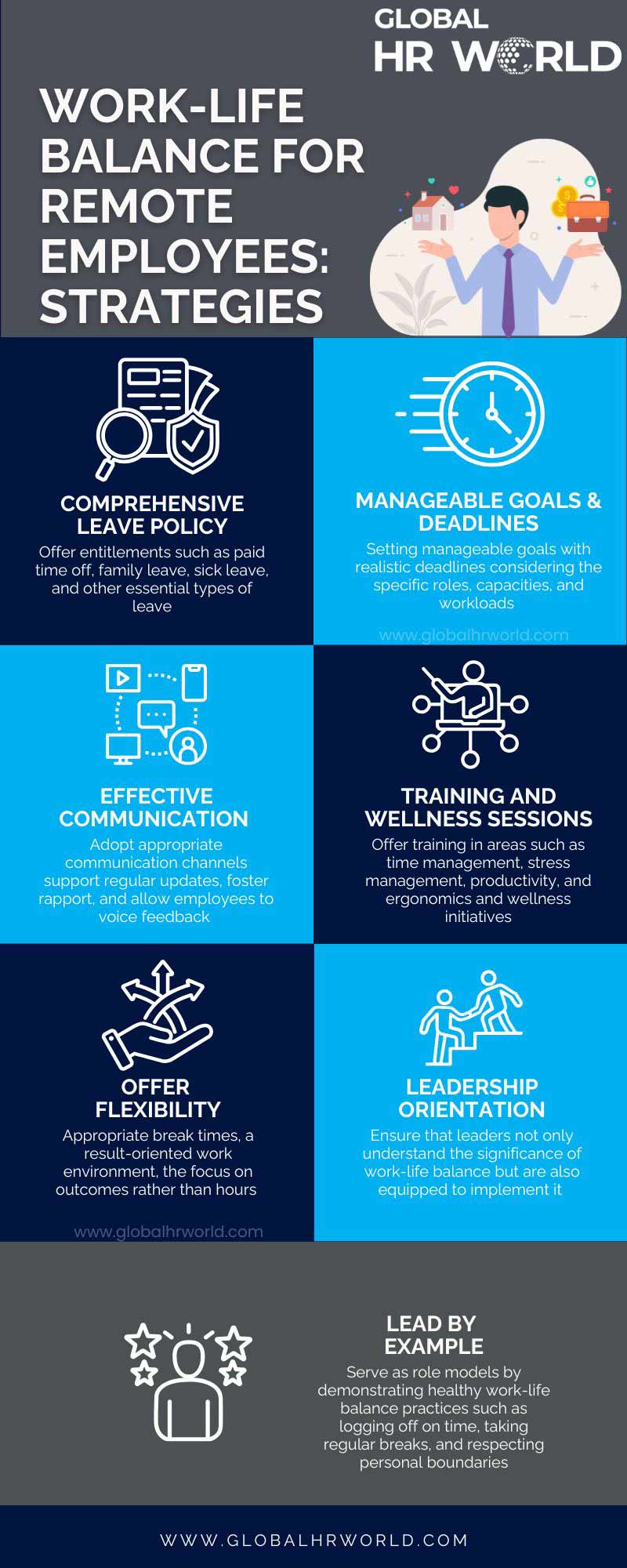
A key strategy for creating a work-life balance for remote employees is to establish a clear and comprehensive leave policy that outlines entitlements such as paid time off, family leave, sick leave, and other essential types of leave. Remote employees may often hesitate to take time off due to unclear guidelines on leave policies, impacting their commitment to work.
Manageable Goals with Realistic Deadlines
Setting manageable goals with realistic deadlines is essential for remote employees, as employers sometimes assign overly ambitious targets without fully considering the specific roles, capacities, and workloads of their employees. This can lead to excessive work hours, blurring the boundary between personal and professional life, and negatively impacting overall well-being.
Effective Communication
Effective communication is a vital factor influencing collaboration and overall productivity in remote work environments. Managers and leadership should adopt appropriate communication channels that support regular updates, foster rapport, and allow employees to voice feedback or concerns, alongside preventing confusion and disengagement. This strategy can ensure timely support and solutions without encroaching on employees’ personal time, preserving work-life balance.
Training and Wellness Sessions
Promoting training and wellness programs can support work-life balance among remote employees. Offering training in areas such as time management, stress management, productivity, and ergonomics equips employees to stay focused and efficient during work hours. Additionally, providing technical training enhances subject matter expertise, reducing task-related anxiety that can be reflected in personal life. Apart from formal training, organizations can implement wellness initiatives alongside, such as employee assistance programs, virtual counselling, and health promotion activities.
Offer Flexibility
Offering flexibility in the workplace through appropriate break times, a result-oriented work environment, the focus on outcomes rather than hours worked, and customized schedules are key factors in fostering work-life balance for remote employees.
Leadership Orientation
In addition to offering training and orientation for employees, it is crucial to provide leadership orientation on the importance of work-life balance and the role they play in fostering it. By adopting leadership-focused training, organizations ensure that leaders not only understand the significance of work-life balance but are also equipped to implement it effectively within their teams.
Lead by Example
Employers and leaders can serve as role models by demonstrating healthy work-life balance practices such as logging off on time, taking regular breaks, and respecting personal boundaries, especially when working remotely.
Conclusion
In a nutshell, creating a work-life balance for remote employees is essential for every organization. By implementing supportive strategies, organization can create a healthier and productive remote work environment.
Infographic
Knowledge Check!
Frequently Asked Questions (FAQs)
What is work-life balance?
Work-life balance is defined as the balance in managing time and efforts in the professional scenario without hindering personal commitments.
What are the elements of work-life balance?
The elements of work-life balance include style management, setting clear boundaries, a supportive work environment, offering flexibility, and stress management.
What is the importance of creating a work-life balance for remote employees?
The importance of creating a work-life balance for remote employees lies in preventing burnout and productivity loss, increasing retention, strengthening relationships, impacting recruitment, enhancing organizational culture, and promoting good employee health.